



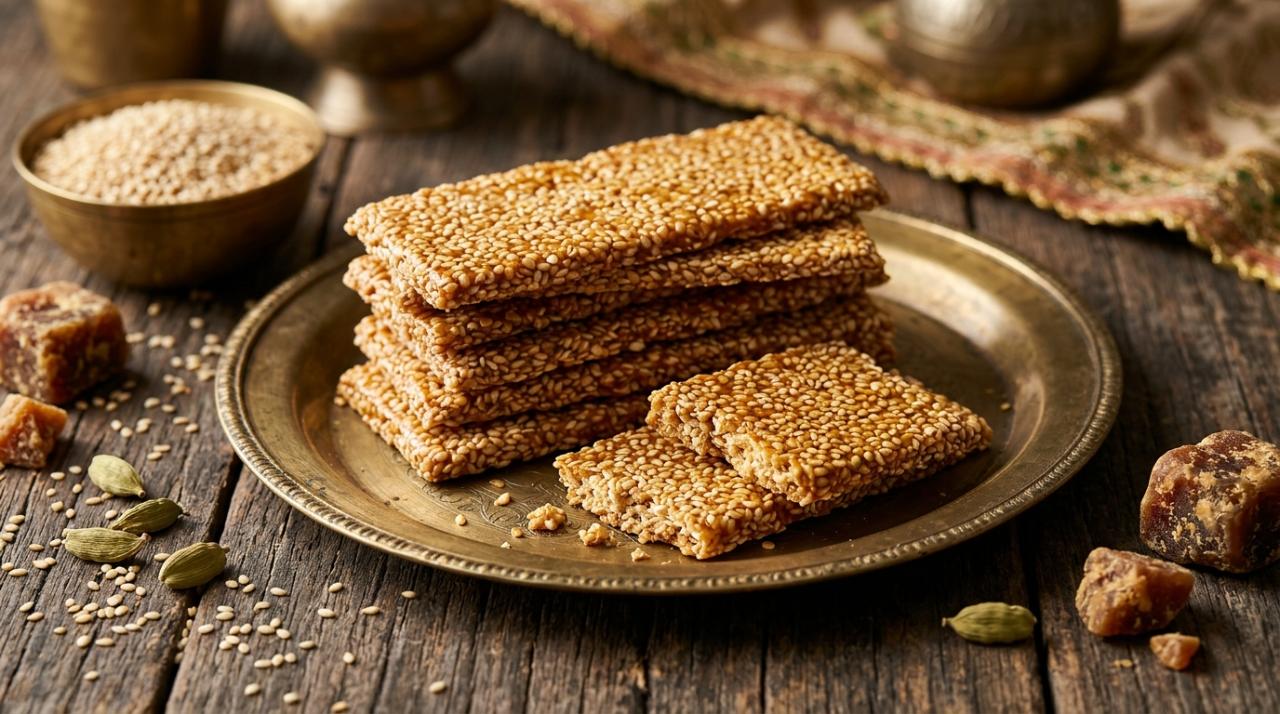
Looking for a sweet treat that is crunchy, naturally rich, and different from ordinary festive desserts? This Sesame Jaggery Gajak Recipe brings together the nutty flavour of roasted sesame seeds and the deep sweetness of jaggery. With only a few ingredients, you can create a delicious traditional Indian sweet at home.
Gajak is especially popular in North India during winter festivals such as Makar Sankranti and Lohri. Although it is not traditionally associated with Diwali in every region, its golden colour, crisp texture, and rich flavour make it a wonderful addition to a festive sweet platter.
Whether you are preparing homemade treats for family gatherings or looking for a simple edible gift, sesame jaggery gajak is a delightful option to try.
What Makes Sesame Jaggery Gajak Special?
The beauty of gajak lies in its simplicity. Sesame seeds provide a toasted, nutty flavour, while jaggery creates a rich caramel-like sweetness. When prepared correctly, the mixture sets into a thin, crunchy sweet that breaks into satisfying pieces.
Unlike desserts that require complicated equipment or long preparation times, this recipe uses everyday ingredients and a straightforward cooking method. The most important part is heating the jaggery syrup to the correct temperature so the gajak becomes crisp instead of chewy.
Ingredients for Sesame Jaggery Gajak
Preparation time: 10 minutes
Cooking time: 15 minutes
Total time: Approximately 25 minutes
Servings: 8–10 pieces, depending on size
Ingredients
- 1 cup white sesame seeds
- ¾ cup grated or finely chopped jaggery
- 1 teaspoon ghee
- ¼ teaspoon cardamom powder (optional)
- 1–2 teaspoons water, only if needed to help melt the jaggery
How to Make Sesame Jaggery Gajak
Step 1: Roast the Sesame Seeds
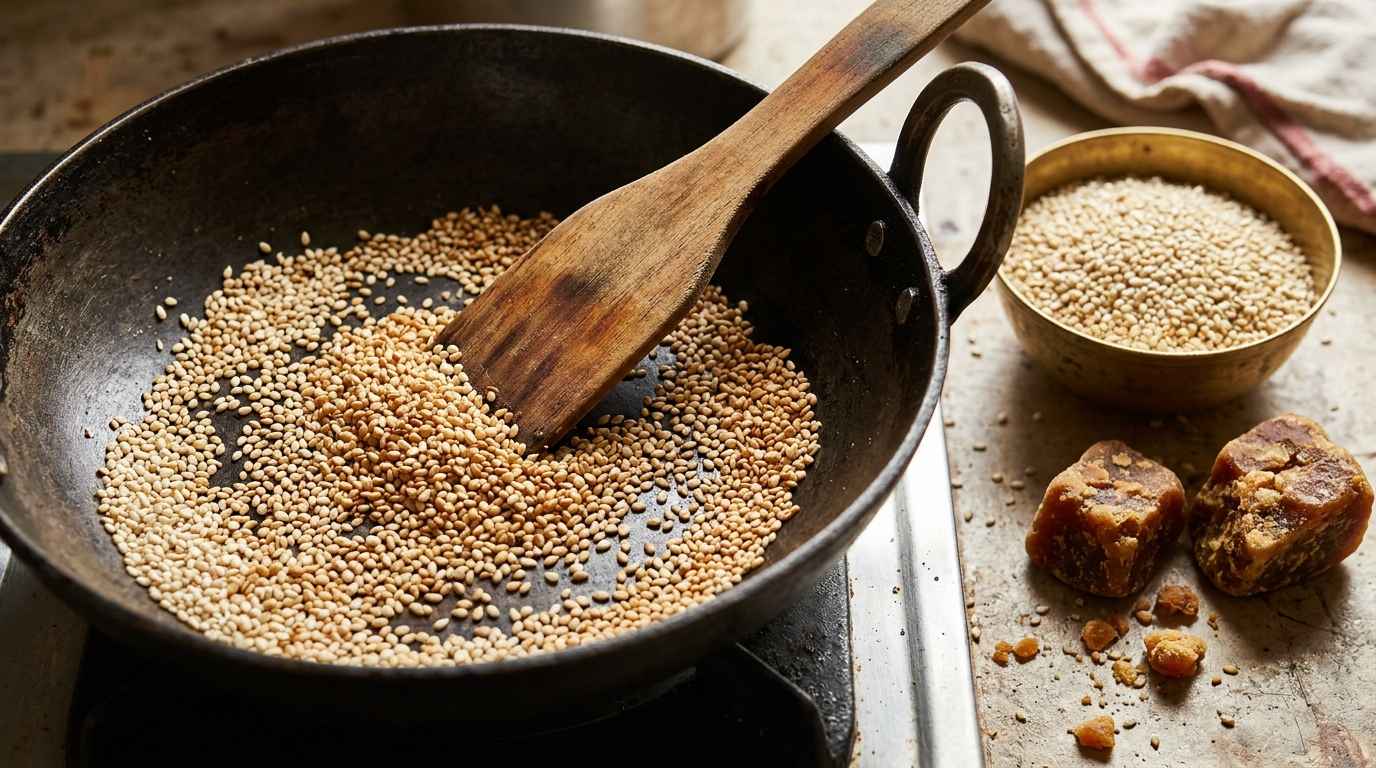
Place a dry pan over low to medium heat. Add the sesame seeds and roast them for a few minutes, stirring continuously. They should become aromatic and lightly golden without burning. Transfer them to a bowl and set aside.
Step 2: Prepare the Jaggery Syrup
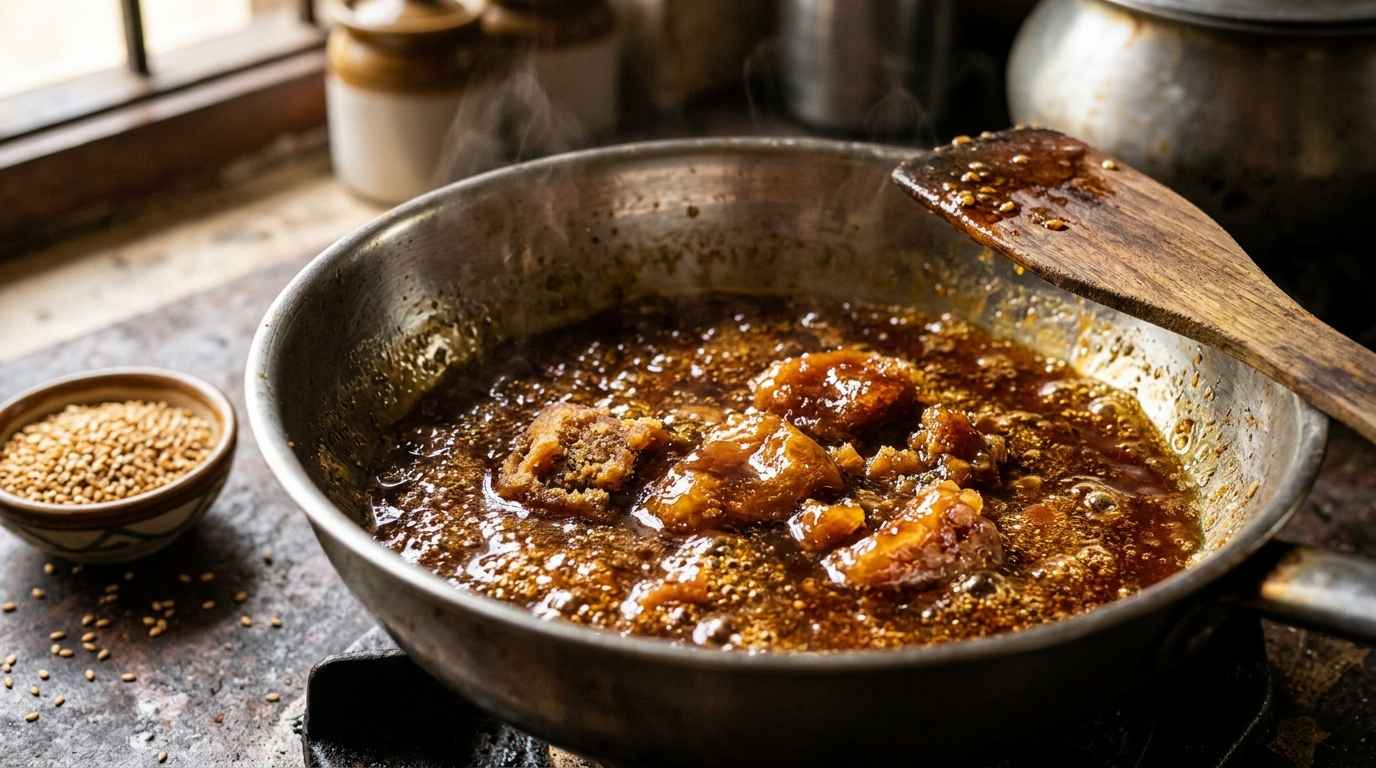
Grease a flat plate or tray with a little ghee and keep it ready. Add the jaggery to a clean, heavy-bottomed pan with a small amount of water if needed. Heat gently until the jaggery melts, stirring to prevent it from sticking.
Continue cooking until the syrup reaches the hard-crack stage, approximately 149–154°C (300–310°F), if using a candy thermometer. Without a thermometer, a small drop placed in cold water should harden quickly and snap rather than remain soft or bendy.
Safety tip: Hot jaggery syrup can cause serious burns. Avoid touching or tasting it while hot, and keep children away from the cooking area.
Step 3: Combine the Ingredients
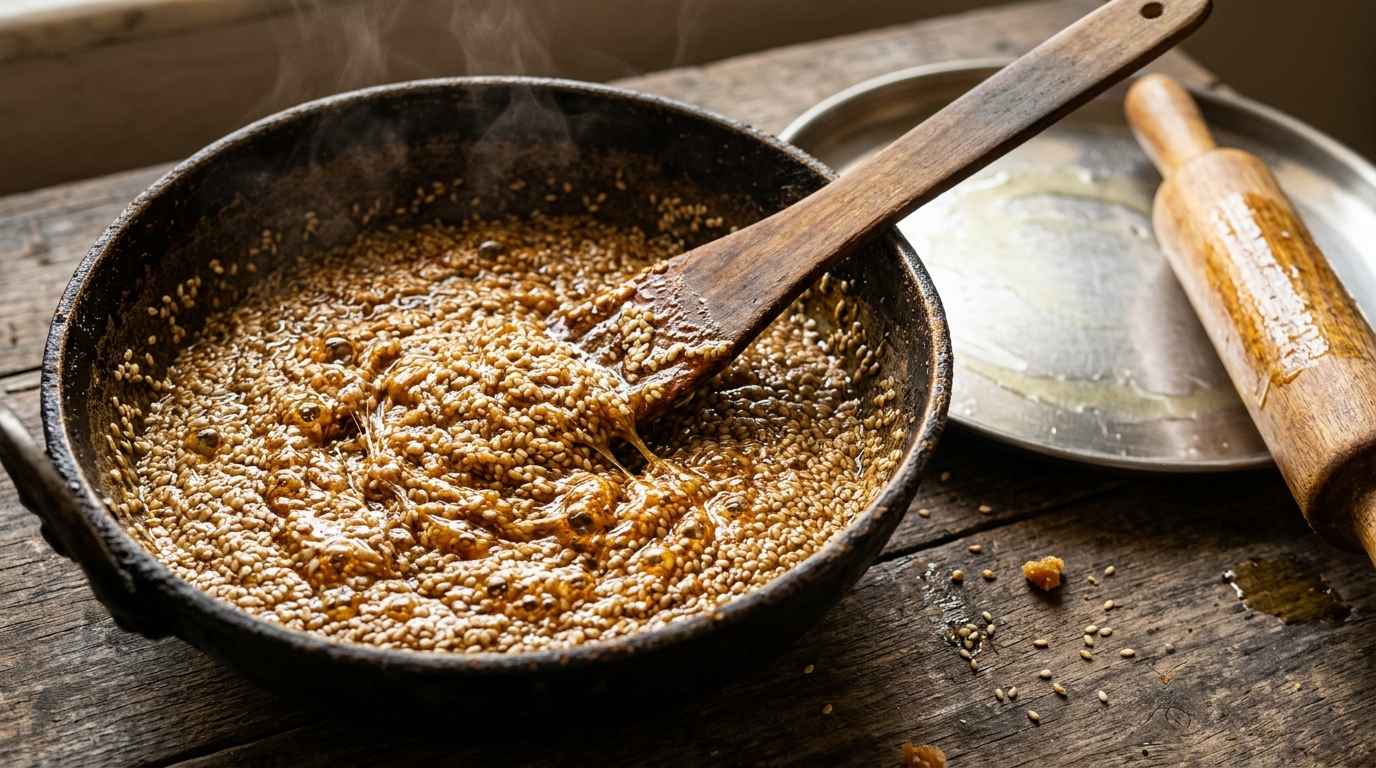
Turn the heat to low. Add the roasted sesame seeds and cardamom powder, if using. Stir quickly until the seeds are evenly coated with the hot jaggery syrup.
Step 4: Shape the Gajak
Immediately transfer the mixture to the greased tray. While it is still warm and pliable, carefully press it into a thin layer using a greased spatula. For a thinner texture, use a lightly greased rolling pin, taking care not to touch the hot mixture directly.
Step 5: Cut and Cool
While the mixture is still warm but firm enough to handle, score it into squares or rectangles with a greased knife. Allow it to cool completely before breaking it into pieces. Once set, the gajak should be crisp and crunchy.
Tips for Perfect Crunchy Gajak
- Roast carefully: Burnt sesame seeds can make the sweet taste bitter.
- Watch the syrup: Undercooked jaggery may produce chewy gajak, while overheating can create a bitter flavour.
- Work quickly: The mixture hardens fast once removed from the heat.
- Prepare everything first: Grease the tray and keep your utensils ready before cooking the jaggery.
- Store correctly: Keep the cooled gajak in an airtight container in a cool, dry place to help maintain its crispness.
How to Serve Sesame Jaggery Gajak
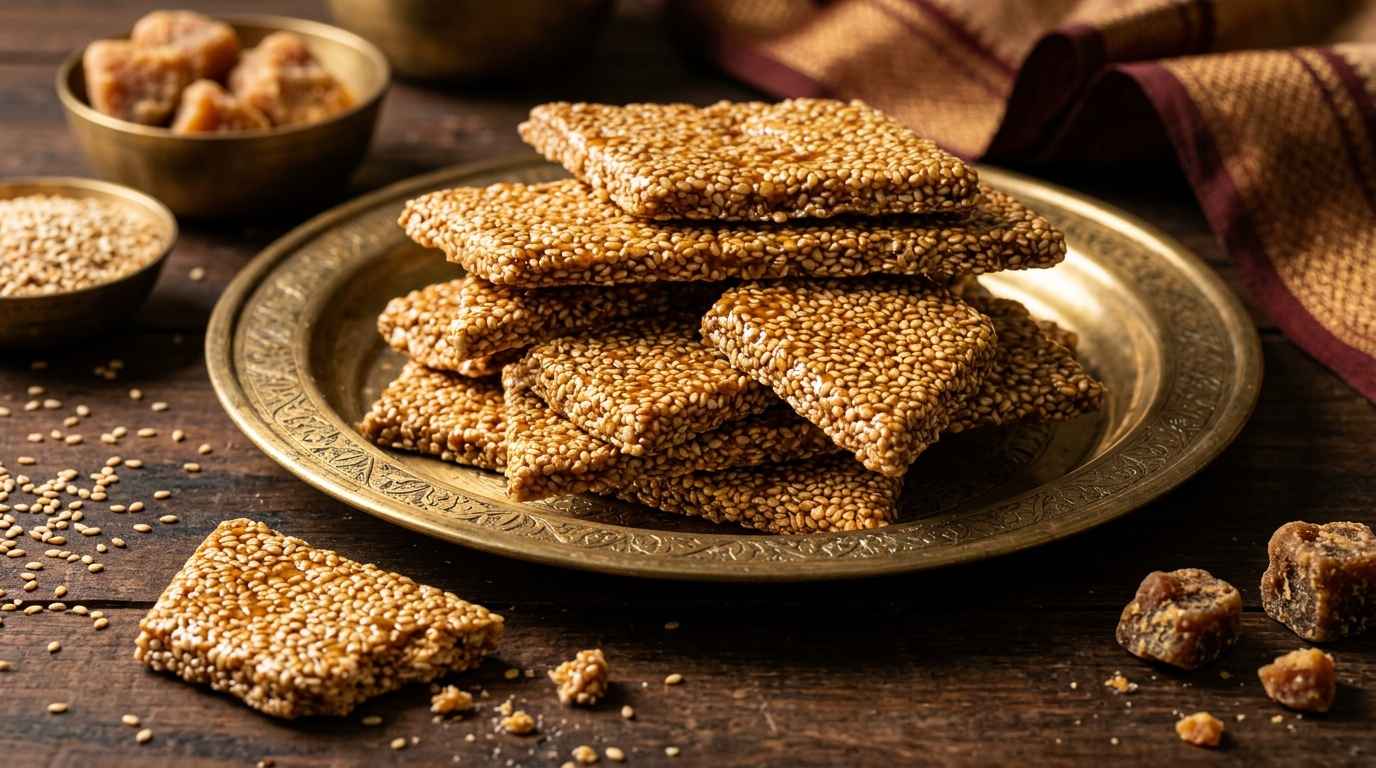
Arrange the gajak pieces on a festive platter with ladoos, palkova, karanji, or other homemade sweets. Their golden-brown colour and crunchy texture offer a pleasing contrast to creamy and soft desserts.
You can also wrap individual pieces in food-safe paper and place them in a small gift box. They make a thoughtful homemade treat for friends, family, and festive visitors.
How to Store Gajak
Once completely cool, store the pieces in an airtight container away from moisture and direct sunlight. Use a clean, dry spoon or hand when handling them. If exposed to humidity, the gajak may lose its crisp texture.
This Sesame Jaggery Gajak Recipe proves that a memorable festive sweet does not need a long ingredient list. Toasted sesame seeds, rich jaggery, and a little patience create a crunchy treat that brings traditional Indian flavours to your home.
Add it to your Diwali dessert platter for something different, share it with loved ones, or enjoy a small piece whenever you crave a sweet and nutty bite. With careful syrup preparation and quick shaping, homemade gajak can become a delightful addition to your collection of festive recipes.
Most Popular











Anaya
comment1