



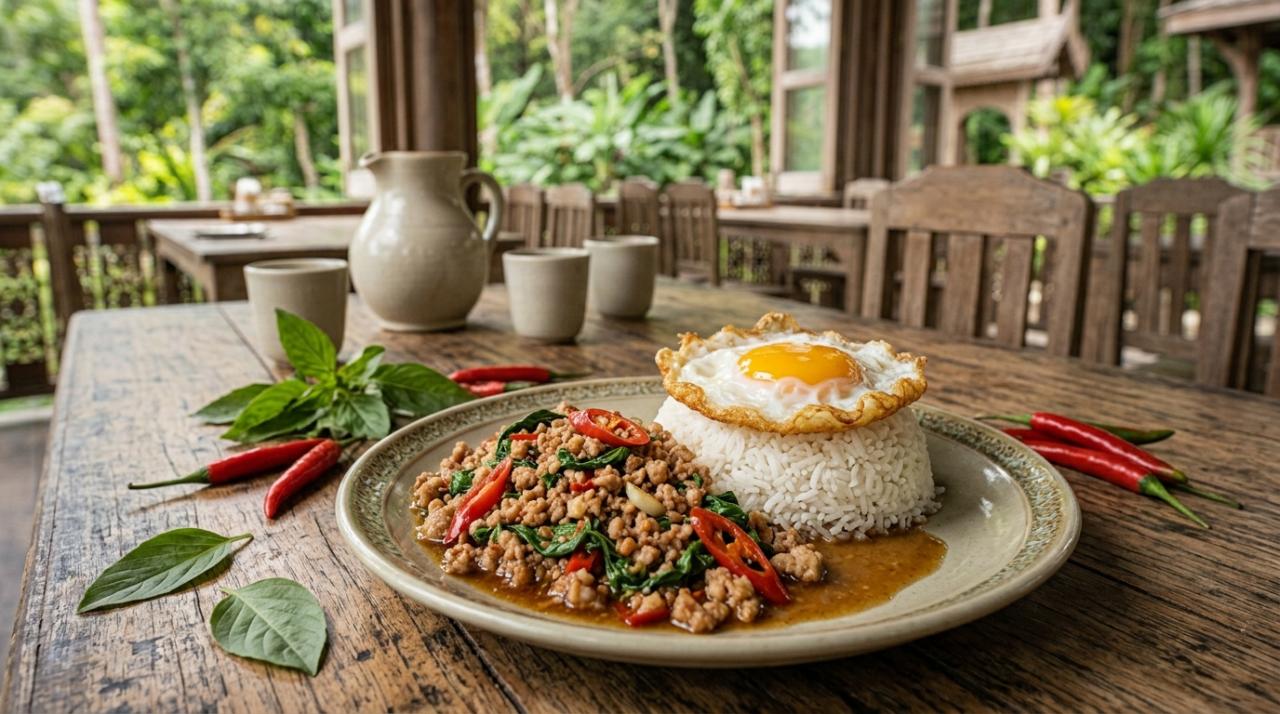
Pad Kra Pao Moo, a dish so ubiquitous in Thailand it's practically a national treasure, is a symphony of spicy, savory, and aromatic flavors. At Sa-biang Restaurant and Cafe, nestled in the heart of Trang, Thailand, we've perfected this beloved stir-fry, and today, we're lifting the veil on what makes our version truly authentic and utterly unforgettable.
Beyond the Basics What Makes Pad Kra Pao Sing
Many attempts at Pad Kra Pao Moo fall short, missing the nuanced balance that defines a truly great rendition. It’s more than just stir-frying minced pork with holy basil. It’s about the quality of ingredients, the precision of the cooking technique, and that undefinable 'something' that comes from generations of culinary tradition. At Sa-biang Restaurant and Cafe, we believe the secret lies in a few key elements.
The Holy Basil Cornerstone
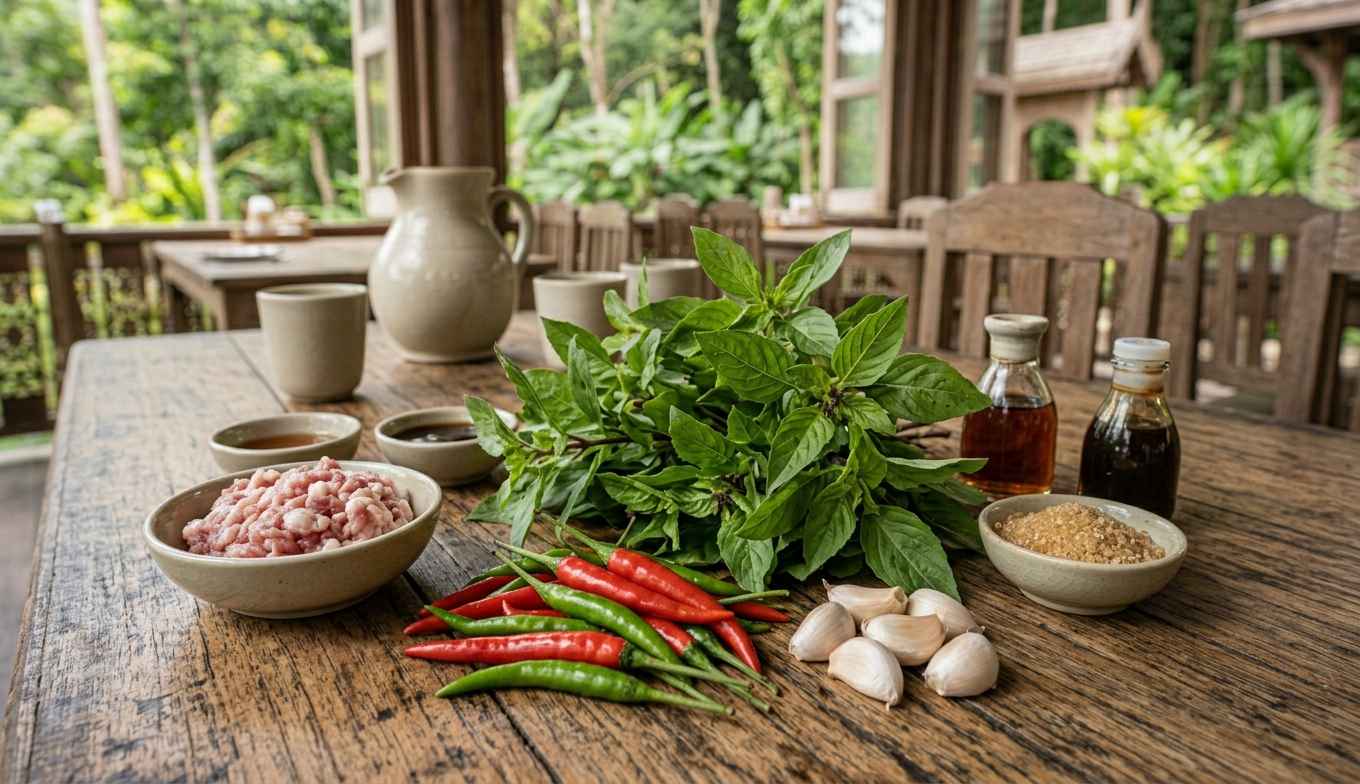
The star ingredient, of course, is kra pao, or holy basil. This isn't your average basil. Holy basil possesses a peppery, slightly clove-like aroma and a distinct pungent flavor that is absolutely crucial to the dish. The freshness of the holy basil cannot be overstated. We source ours daily from local markets in Trang, ensuring that vibrant, intoxicating aroma fills every bite. When cooked quickly at high heat, the basil wilts slightly but retains its incredible fragrance, infusing the pork and sauce with its signature essence. It’s this potent aromatic quality that truly sets authentic Pad Kra Pao apart.
The Pork Perfection
While minced pork is the standard, the cut and preparation matter. We opt for a blend that provides a good balance of lean meat and fat. This ensures the pork remains tender and juicy, preventing it from becoming dry or mushy during the high-heat stir-fry. The pork is typically cooked just until it's no longer pink, allowing it to absorb the flavors of the sauce without overcooking.
The Flavor Foundation The Sauce Symphony
The sauce for Pad Kra Pao is a delicate dance of savory, sweet, and spicy. At Sa-biang Restaurant and Cafe, our family recipe emphasizes a harmonious blend. Key components include fish sauce for its umami depth, oyster sauce for richness, a touch of sugar to balance the saltiness and spice, and crucially, a liberal dose of fresh chilies and garlic. The chilies provide that characteristic fiery kick, while the garlic adds a pungent foundation. We prepare our sauce mixture beforehand, ensuring it's perfectly balanced before it hits the sizzling wok. The magic happens when this sauce is rapidly incorporated with the pork and basil, creating a glossy coating that clings to every morsel.
The Sizzle and Sear The Wok Hei Advantage
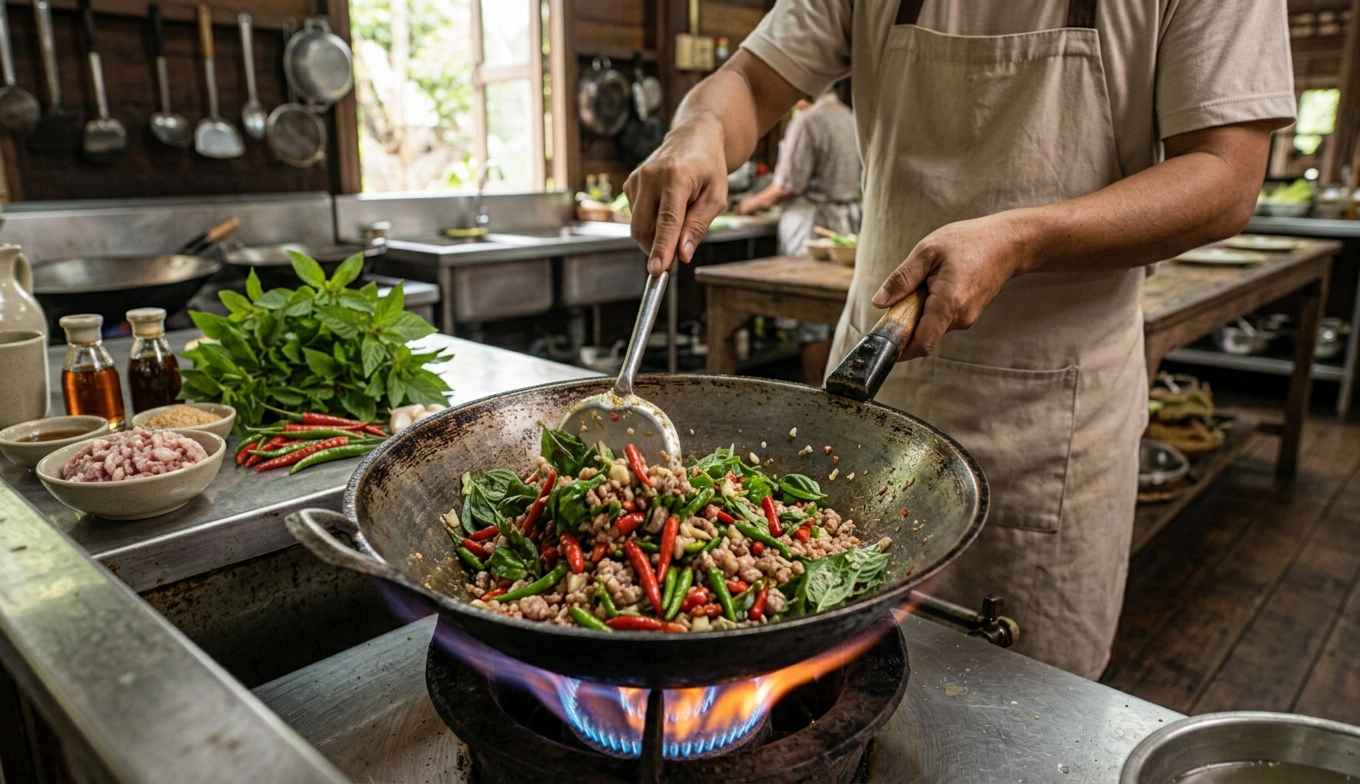
The cooking method is paramount. Pad Kra Pao is a dish that thrives on intense heat and rapid cooking. We utilize a well-seasoned wok over a high flame. This high heat is essential for achieving 'wok hei,' that elusive smoky flavor imparted by the intense heat of the wok. It’s this rapid stir-frying that sears the pork perfectly, melds the sauce ingredients, and lightly toasts the holy basil, releasing its full aroma. The speed of cooking is crucial; overcooking will diminish the freshness of the basil and the succulence of the pork.
The Perfect Pairing The Rice and Egg
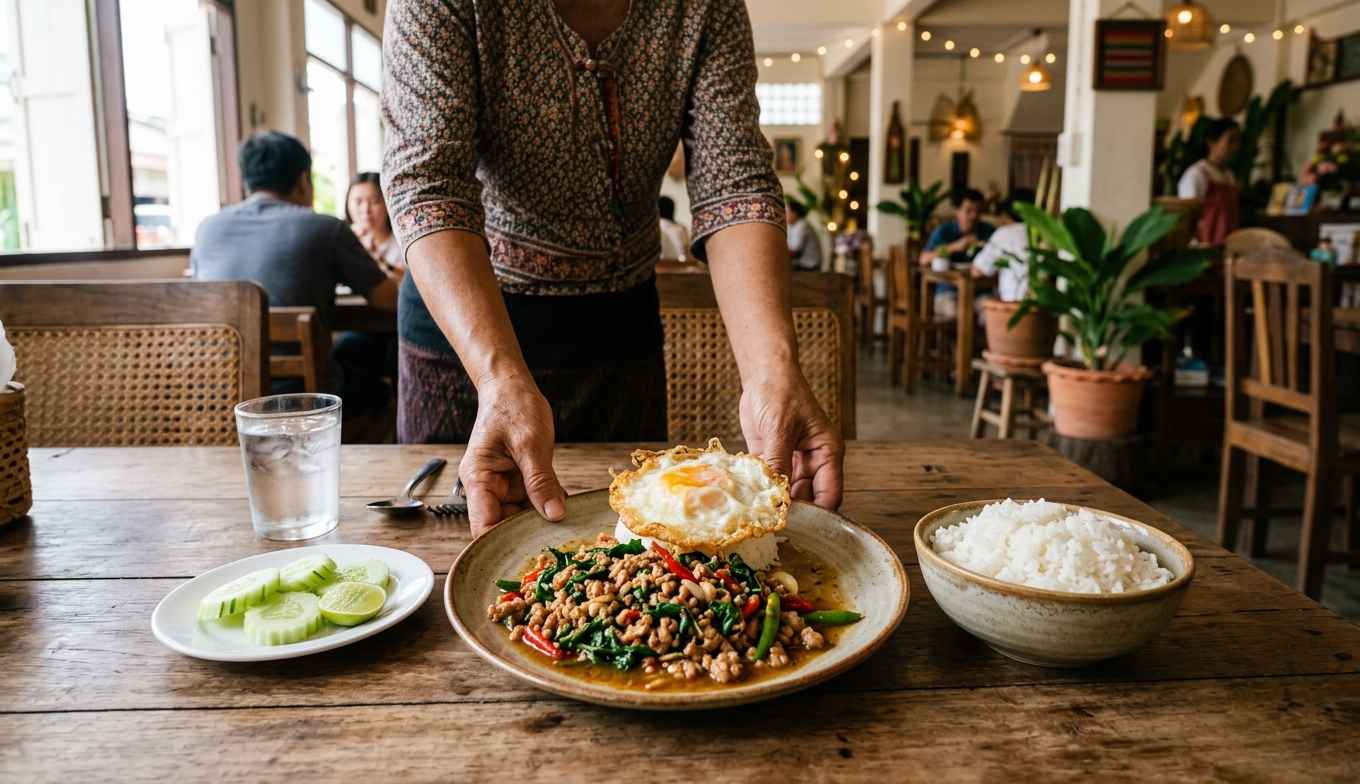
No Pad Kra Pao is complete without its perfect companions: a steaming mound of jasmine rice and a crispy fried egg. The fluffy rice acts as a neutral canvas, soaking up the delicious sauce. The fried egg, with its slightly runny yolk, adds another layer of richness and texture. A perfectly fried egg for Pad Kra Pao should have crispy edges and a molten center, ready to be broken and mixed into the savory pork. It's this simple yet perfect combination that elevates the entire dish.
At Sa-biang Restaurant and Cafe in Trang, Thailand, we are passionate about sharing the true taste of Thai cuisine. Our Pad Kra Pao Moo is a testament to our dedication to authentic flavors and time-honored techniques. We invite you to visit us and experience the perfect balance of spice, savory, and aroma that has made this dish a favorite for generations. It's more than just a meal; it's a taste of Thai culinary heritage, crafted with love and served with pride.
Most Popular







Anaya
comment1