



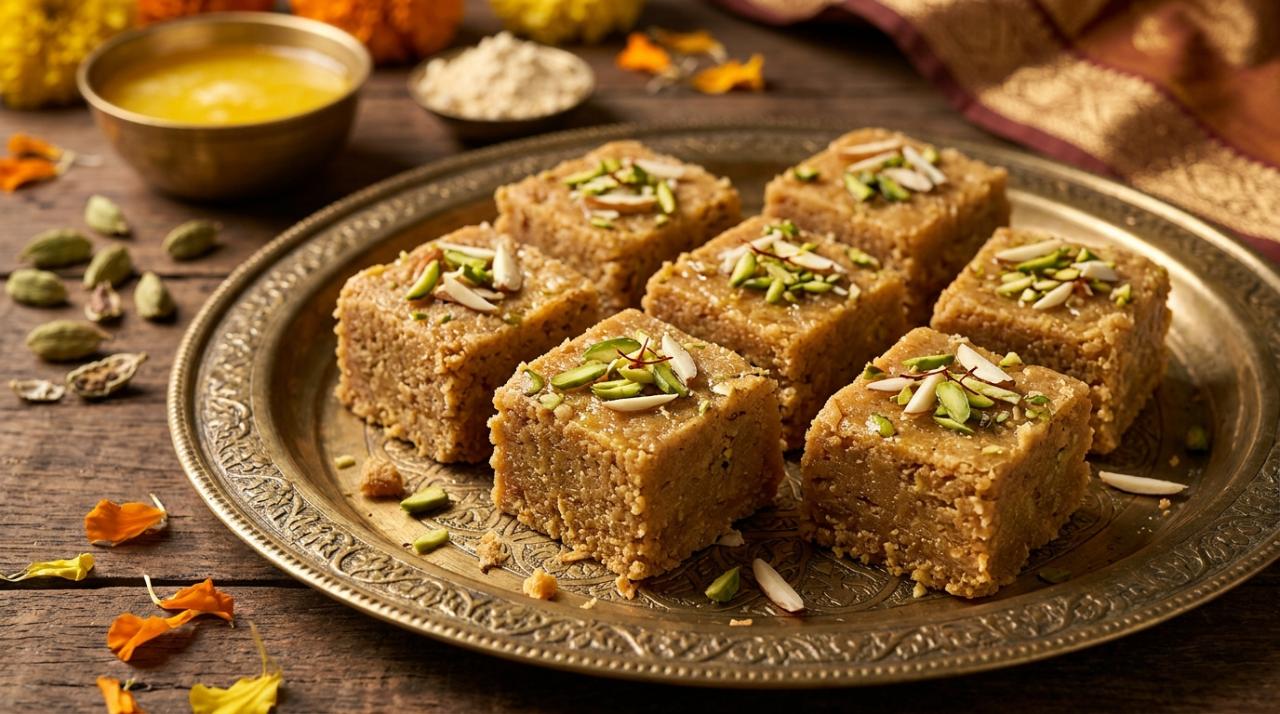
Diwali celebrations are incomplete for many families without a beautiful selection of homemade sweets. Across India, every region brings its own flavours and traditions to the festive table. In Gujarat, Mohanthal is a cherished sweet known for its rich aroma, grainy texture, and deep flavour created by slow-roasted gram flour and ghee.
This traditional Gujarati dessert resembles a soft, rich fudge, often finished with chopped almonds, pistachios, and fragrant cardamom. Although its ingredients are simple, the secret to excellent Mohanthal lies in careful roasting and achieving the right sugar-syrup consistency.
If you are looking for a festive dessert that feels both traditional and indulgent, this traditional Mohanthal recipe is a wonderful addition to your Diwali menu. It is also suitable for preparing ahead of family gatherings and festive gifting.
What Makes Mohanthal a Traditional Favourite?
Mohanthal is particularly associated with Gujarati cuisine and is commonly enjoyed during festivals, religious occasions, and family celebrations. Its signature texture comes from gram flour, also known as besan, which is slowly roasted in ghee until it develops a nutty aroma and golden colour.
Some traditional preparations use a technique called dhrabo, in which a little milk or water is rubbed into the flour before roasting. This helps create tiny granules that give Mohanthal its characteristic grainy texture.
The combination of roasted flour, ghee, sugar, and cardamom creates a sweet that is rich without needing elaborate ingredients. A garnish of nuts adds colour, crunch, and an attractive festive finish.
Ingredients for Homemade Mohanthal
This recipe makes approximately 12–16 small squares.
For the sweet
- 2 cups gram flour (besan)
- ½ cup ghee, plus a little extra if needed
- 2 tablespoons milk for creating granules
- 1 cup sugar
- ½ cup water for the sugar syrup
- ¼ teaspoon cardamom powder
- 2 tablespoons chopped almonds
- 2 tablespoons chopped pistachios
Optional: A few strands of saffron or a small amount of edible garnish for a festive presentation.
How to Make Traditional Mohanthal Step by Step
Step 1: Prepare the Gram Flour Granules
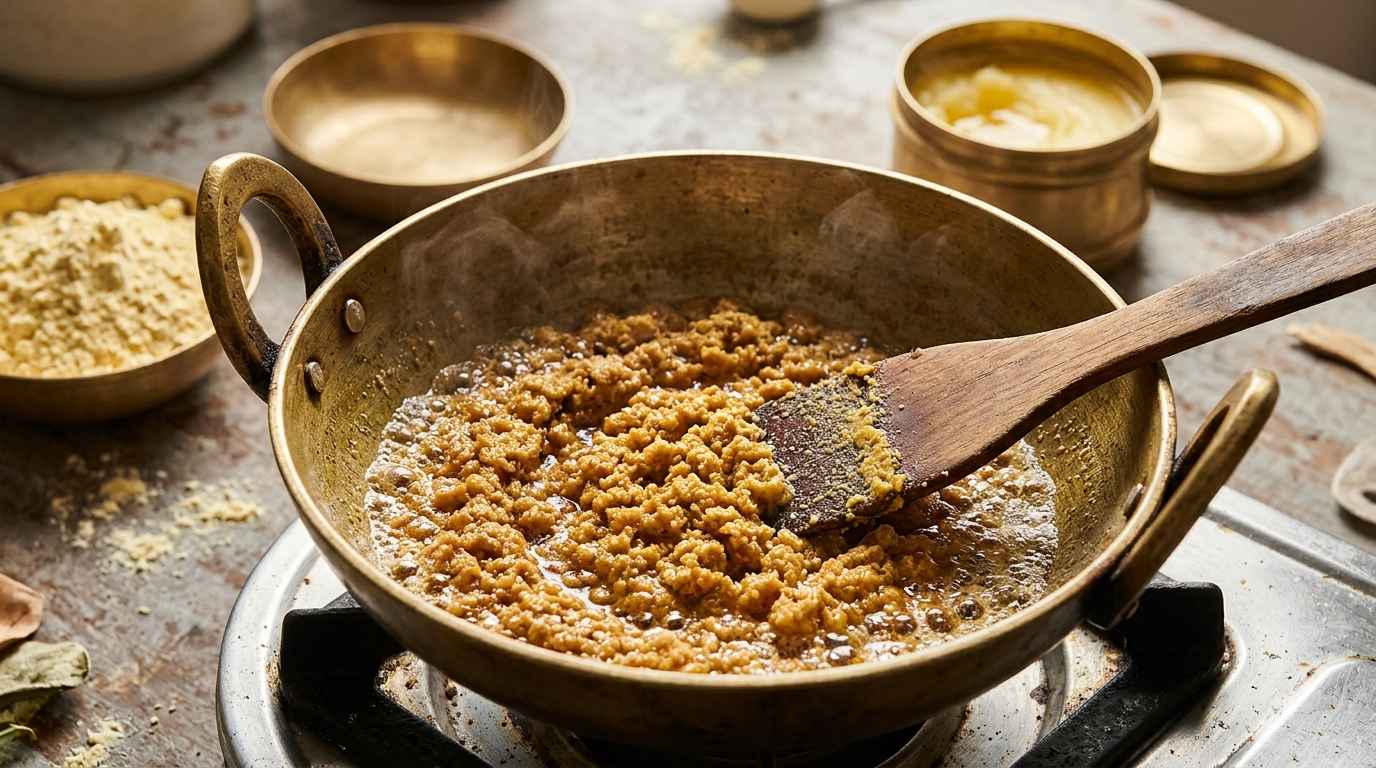
Place the gram flour in a large bowl. Add the milk gradually and rub it into the flour with your fingertips until small granules form.
Pass the mixture through a sieve to create an even texture. This step helps produce the tiny, soft grains that make traditional Mohanthal distinctive.
Step 2: Roast the Flour in Ghee
Heat the ghee in a heavy-bottomed pan over low to medium-low heat. Add the prepared gram flour and stir continuously.
Roast patiently for approximately 15–25 minutes, depending on the pan and heat level. The flour should gradually deepen in colour and develop a warm, nutty fragrance. Avoid high heat, as gram flour can burn quickly and become bitter.
If the mixture appears too dry, add a little more ghee. Once the flour is aromatic and golden, remove it from the heat and set it aside.
Step 3: Prepare the Sugar Syrup
Combine the sugar and water in a separate saucepan. Heat gently, stirring until the sugar dissolves.
Continue cooking until the syrup reaches the appropriate consistency for setting a soft fudge. Traditional Mohanthal recipes often use a one-string syrup, but exact consistency and temperature can vary with the recipe.
Take care when handling hot sugar syrup because it can cause serious burns.
Step 4: Combine the Mixture
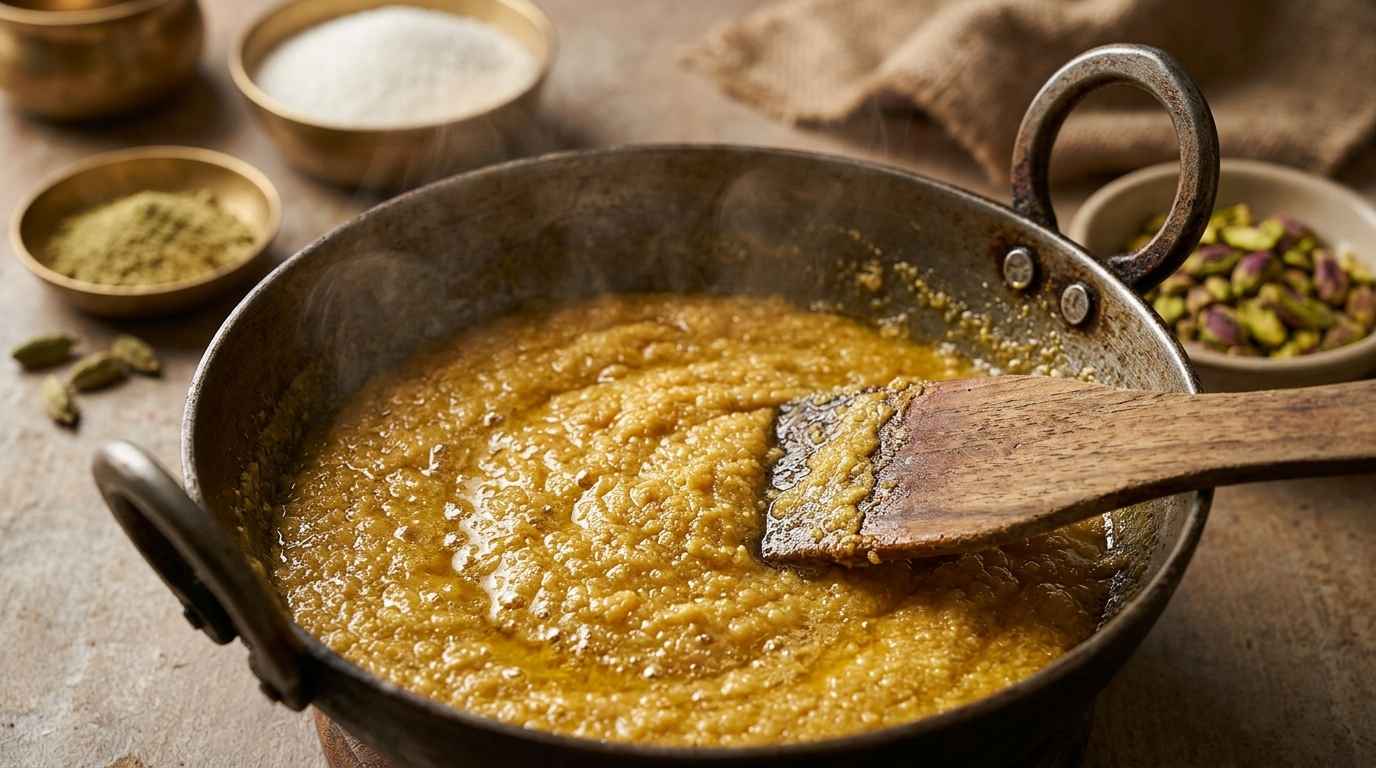
Gradually add the hot sugar syrup to the roasted gram flour while stirring continuously. Work carefully to avoid splashes.
Add the cardamom powder and mix thoroughly. The mixture should become thick and cohesive, with a slightly grainy texture. If the mixture is too loose, allow it to cook gently for a little longer, stirring constantly.
Step 5: Set and Garnish the Mohanthal
Grease a shallow tray or line it with baking parchment. Transfer the warm mixture into the tray and spread it evenly.
Sprinkle the chopped almonds and pistachios over the surface, pressing them gently into the mixture. Allow the Mohanthal to cool and set at room temperature.
Once firm enough to cut, slice it into squares or diamond-shaped pieces. Arrange them on a decorative plate for serving.
Expert Tips for Perfect Mohanthal
The biggest secret to a delicious traditional Mohanthal recipe is patience. Roasting the gram flour too quickly can leave a raw taste, while excessive heat can burn the mixture.
Use a heavy-bottomed pan and stir continuously during roasting. Sieve the flour after adding milk to prevent large lumps, and prepare the sugar syrup carefully. The syrup consistency affects how well the sweet sets, so avoid adding excessive water.
For a richer aroma, use fresh cardamom powder and good-quality ghee. Allow the sweet to cool properly before cutting to achieve neat, attractive pieces.
How to Serve and Store Mohanthal
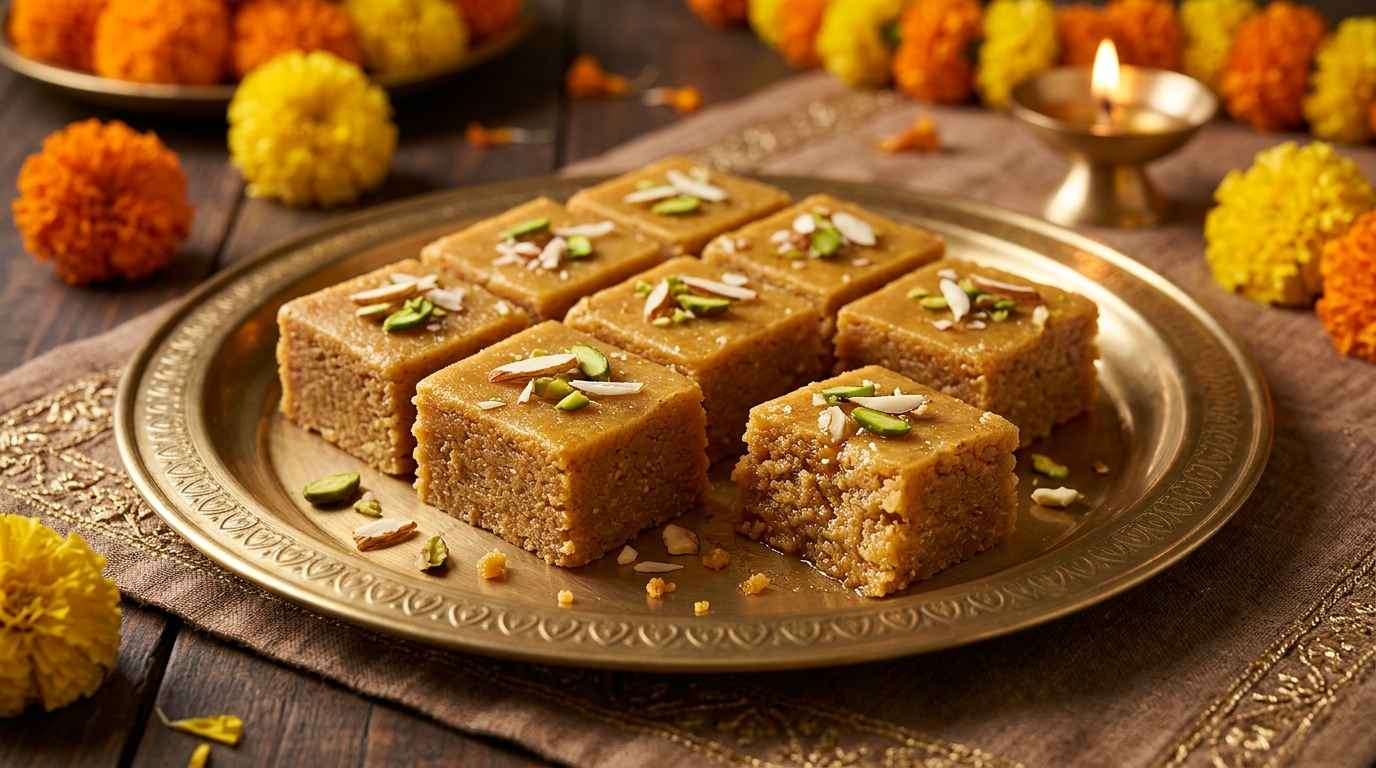
Mohanthal is delicious served with masala tea, traditional Indian coffee, or other festive sweets such as adhirasam and karanji. Its rich flavour makes it ideal for small portions on a Diwali dessert platter.
Once completely cooled and set, store the pieces in a clean, airtight container. Storage time depends on moisture content, preparation, and room temperature. Refrigerate when appropriate, particularly in warm or humid weather, and bring the pieces to a comfortable serving temperature before enjoying.
Mohanthal can also be packaged in food-safe boxes as a homemade Diwali gift for friends, neighbours, and colleagues.
Celebrate Diwali with a Taste of Gujarat
Traditional Mohanthal is a beautiful example of how simple ingredients can become an extraordinary festive dessert. Slowly roasted gram flour, fragrant ghee, cardamom, and sugar combine to create its unmistakable richness and grainy texture.
By preparing this traditional Mohanthal recipe at home, you can explore Gujarati culinary heritage while adding something special to your Diwali celebrations. Take your time with each step, enjoy the wonderful aroma as the flour roasts, and share these homemade sweets with the people who make the festival meaningful.
Most Popular











Anaya
comment1