



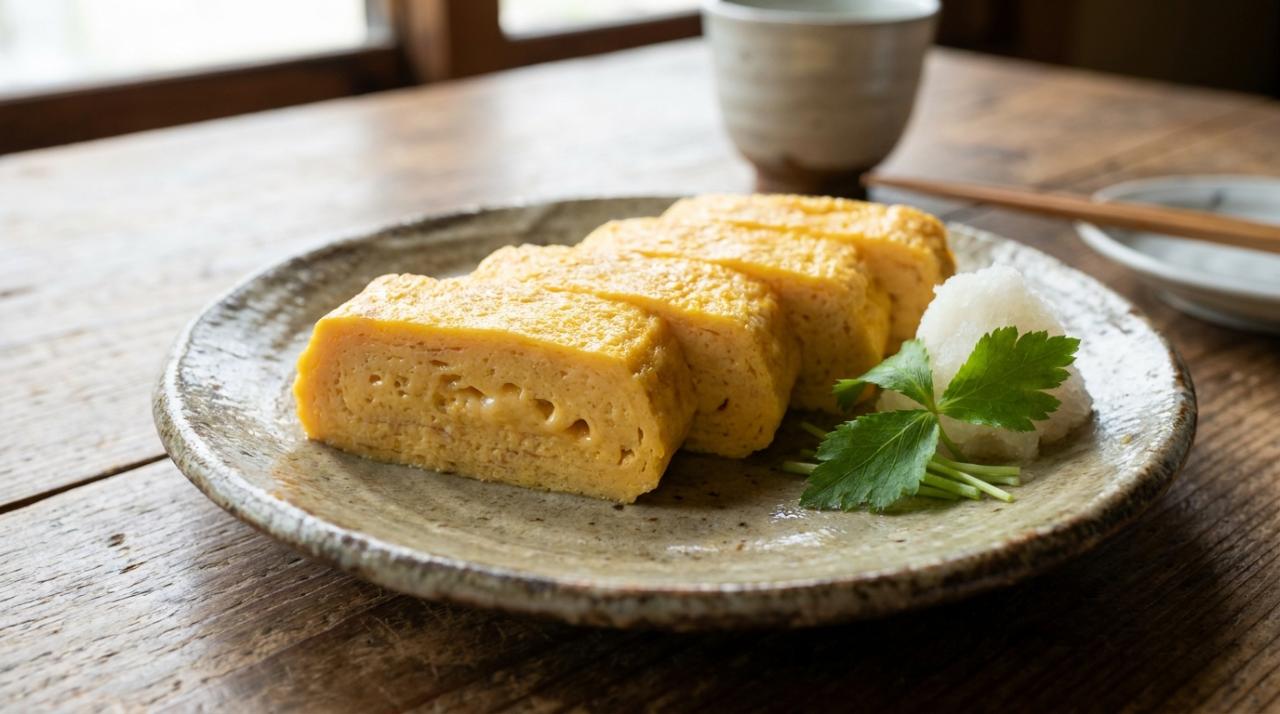
Japanese cuisine is famous for turning everyday ingredients into beautifully prepared dishes. One excellent example is tamagoyaki, a traditional Japanese rolled omelette made by cooking thin layers of seasoned egg and rolling them together into a soft, rectangular shape. It is commonly enjoyed at breakfast, served in bento lunchboxes, and included in traditional Japanese meals.
A traditional Japanese tamagoyaki recipe uses just a few ingredients, yet preparing it well requires patience and a little practice. Eggs are gently mixed with seasonings such as dashi, soy sauce, mirin, and sugar before being cooked in thin layers. Each layer is rolled over the previous one, creating the distinctive appearance of this Japanese favorite.
Depending on the region and household, tamagoyaki can be sweet, savory, or somewhere between the two. With the right technique, you can prepare this comforting dish at home and enjoy a classic part of Japanese food culture.
What Makes Traditional Japanese Tamagoyaki Special?
The word tamagoyaki means “cooked egg” in Japanese. Although the dish may look similar to a Western omelette, its preparation is different. Instead of folding one thick layer of egg, cooks build several thin layers and roll them together as they cook.
Tamagoyaki is traditionally prepared in a rectangular or square pan called a makiyakinabe, which helps create its characteristic shape. However, a small non-stick frying pan can also work well for home cooking.
The flavor varies according to the recipe. Some versions include dashi for a delicate savory taste, while others contain sugar and mirin for gentle sweetness. Tamagoyaki is also a familiar ingredient in sushi restaurants, where it may be served as a topping for nigiri sushi.
Ingredients for Traditional Japanese Tamagoyaki
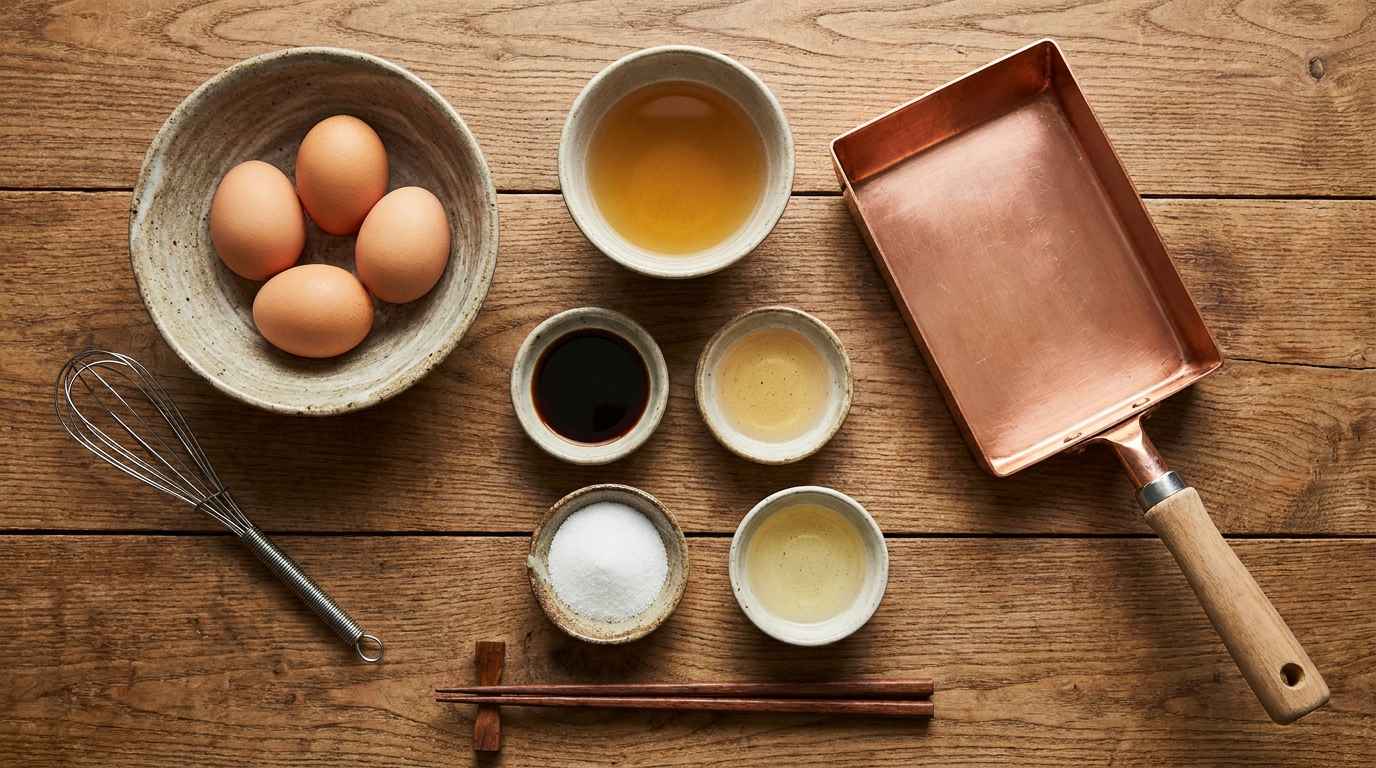
For two servings:
- 4 large eggs
- 2 tablespoons dashi stock
- 1 teaspoon Japanese soy sauce
- 1 teaspoon mirin
- 1–2 teaspoons sugar, according to taste
- A small amount of neutral cooking oil
For a slightly sweeter version, use the larger amount of sugar. For a more savory result, reduce the sugar and emphasize the dashi flavor.
Freshly prepared dashi gives the omelette a traditional Japanese taste, although good-quality instant dashi can be used for convenience.
Step-by-Step Guide to Making Japanese Tamagoyaki
Step 1: Prepare the Egg Mixture
Crack the eggs into a bowl and beat them gently with chopsticks or a fork. Try to combine the yolks and whites without creating too much foam.
Add the dashi stock, soy sauce, mirin, and sugar. Mix until the sugar dissolves and the ingredients are evenly combined.
For an especially smooth texture, strain the mixture through a fine sieve. This is optional, but it helps remove larger strands of egg white.
Step 2: Heat and Oil the Pan
Place a rectangular tamagoyaki pan or a small non-stick frying pan over medium-low heat. Lightly coat the surface with cooking oil.
The pan should be warm enough to cook the egg steadily without browning it too quickly. If the pan is too hot, the egg may develop dark spots and become difficult to roll.
Keep a folded paper towel lightly coated with oil nearby to grease the pan between layers, taking care to keep it away from direct contact with the flame or heating element.
Step 3: Cook the First Layer
Pour a thin layer of egg mixture into the pan, tilting it gently so the egg covers the surface.
When the underside begins to set and the top remains slightly moist, use chopsticks or a spatula to roll the egg from one side toward the other. Work carefully, as the first roll establishes the shape for the remaining layers.
Move the rolled egg to one side of the pan.
Step 4: Add and Roll the Remaining Layers
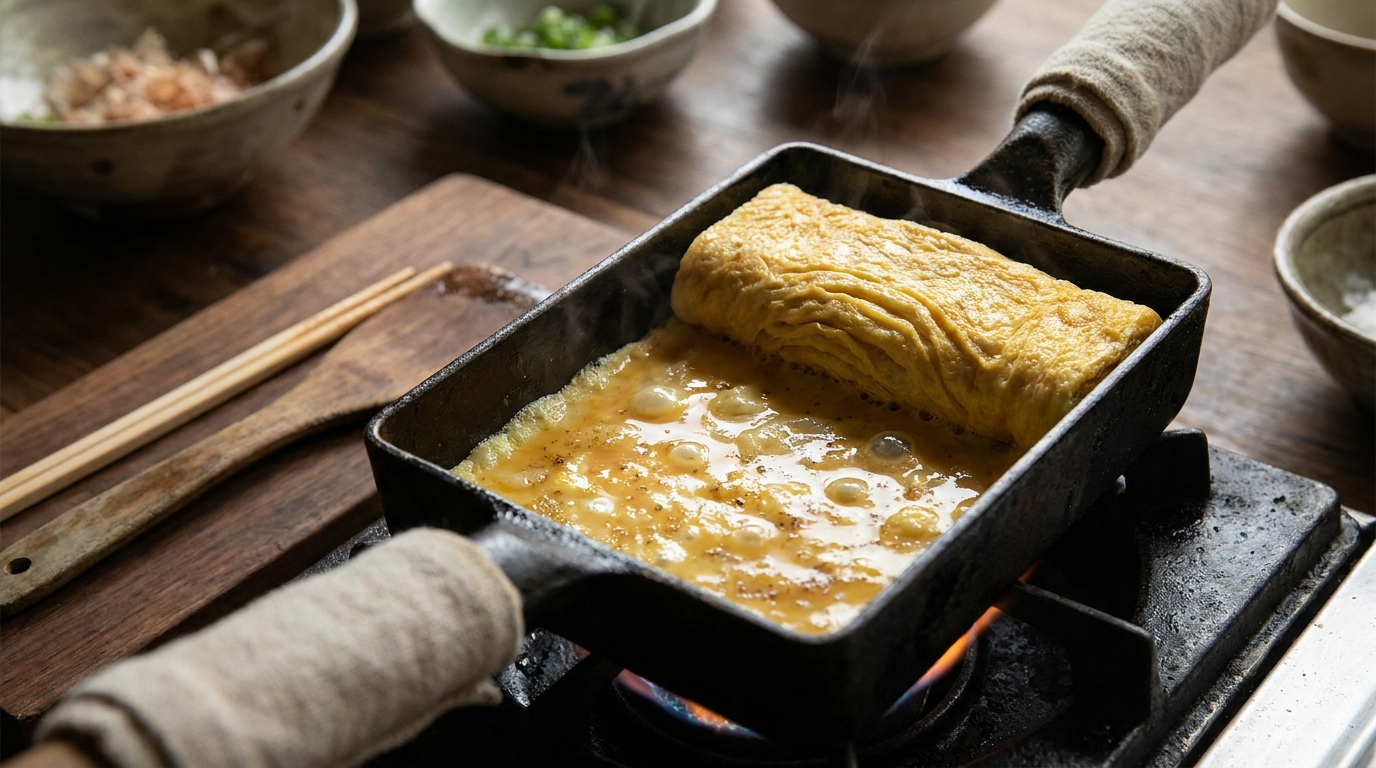
Lightly oil any exposed pan surface. Pour another thin layer of egg mixture into the pan, lifting the first roll slightly so some of the new mixture flows underneath it.
Once the new layer begins to set, roll the existing omelette over it. Continue adding thin layers and rolling them together until all the egg mixture has been used.
Keep the heat at medium-low and work patiently. The egg should cook gently without becoming dry or heavily browned.
Step 5: Shape and Rest the Omelette
Once the final layer is cooked, transfer the tamagoyaki to a plate. While it is still warm, gently shape it with a bamboo sushi mat if you have one.
Allow the omelette to rest for a few minutes before cutting it into thick slices. This helps the layers settle and makes the pieces easier to handle.
Serve warm or at room temperature as part of a Japanese meal.
Traditional Tips for Perfect Tamagoyaki
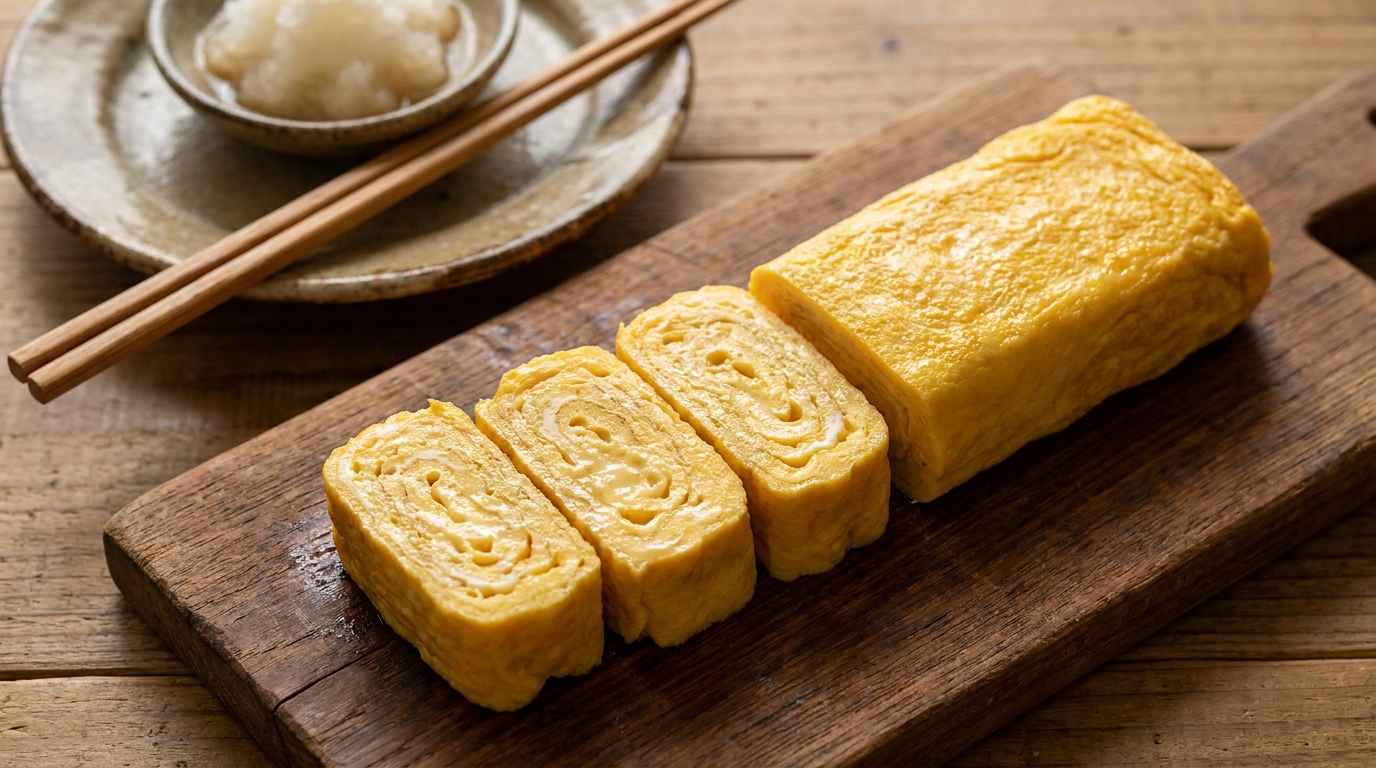
The most important technique is controlling the heat. Gentle cooking keeps the egg tender and makes it easier to roll each layer without tearing.
Avoid pouring too much egg mixture into the pan at once. Thin layers create the characteristic pattern and allow the omelette to cook evenly.
Adjust the balance of sugar, mirin, and dashi according to your preferred regional style. Tamagoyaki does not have one universal flavor profile, so both sweet and savory versions can be authentic.
For a complete Japanese-style breakfast, serve tamagoyaki with steamed rice, miso soup, and grilled fish. It also works well in a bento lunchbox alongside vegetables and rice.
Conclusion
A traditional Japanese tamagoyaki recipe shows how a simple ingredient like eggs can become a distinctive dish through patience and technique. Its soft layers, balanced seasoning, and neat rectangular shape make it a beloved part of Japanese home cooking.
Although rolling the omelette may take a little practice, each attempt helps improve your timing and control. With eggs, dashi, and a few Japanese seasonings, you can create homemade tamagoyaki for breakfast, lunchboxes, or a traditional Japanese-inspired meal.
Most Popular













Anaya
comment1