



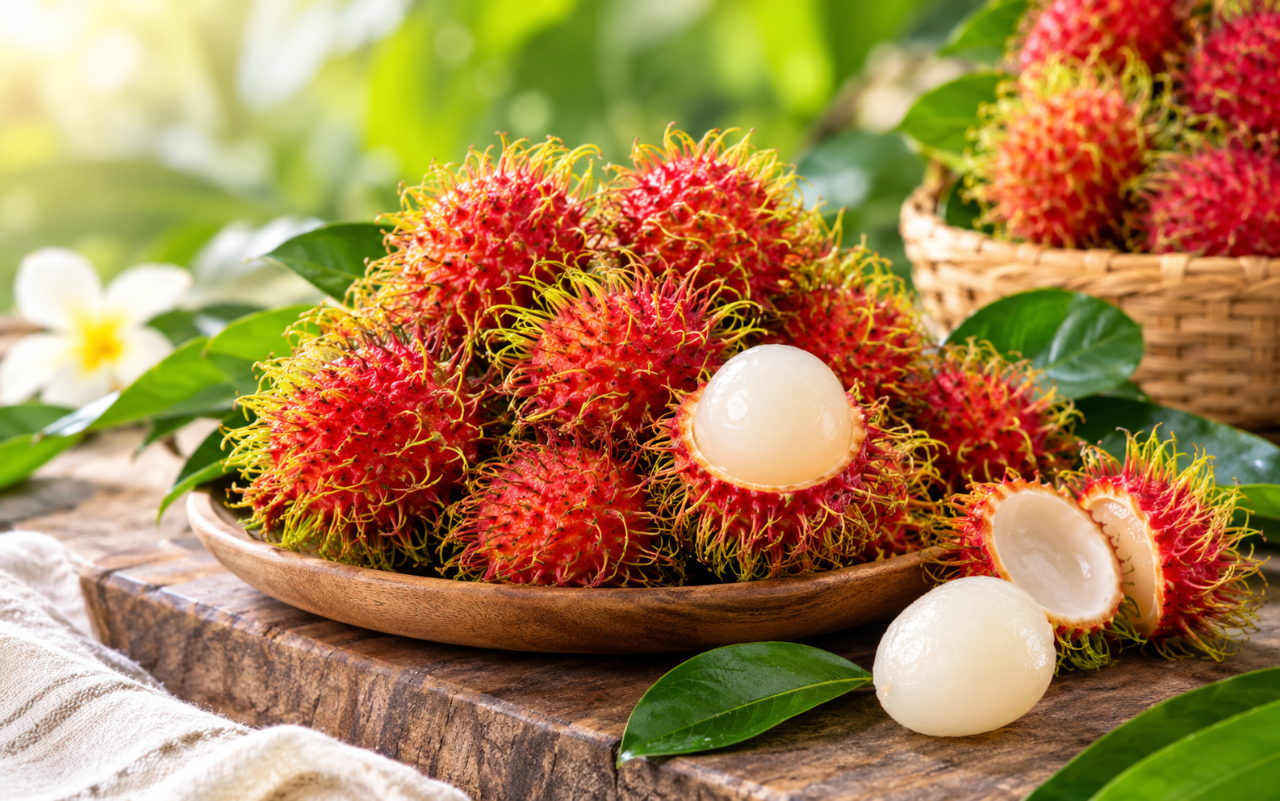
In the vibrant tapestry of tropical fruits, the rambutan stands out with its unique and somewhat formidable appearance. Adorned with soft, hair-like spines, this exotic fruit, scientifically known as Nephelium lappaceum, offers a delightful sensory experience that goes far beyond its spiky exterior. Native to Southeast Asia, the rambutan has captivated palates for centuries with its sweet, juicy flesh and intriguing origin story.
A Glimpse into the Rambutan's Origins and Appearance 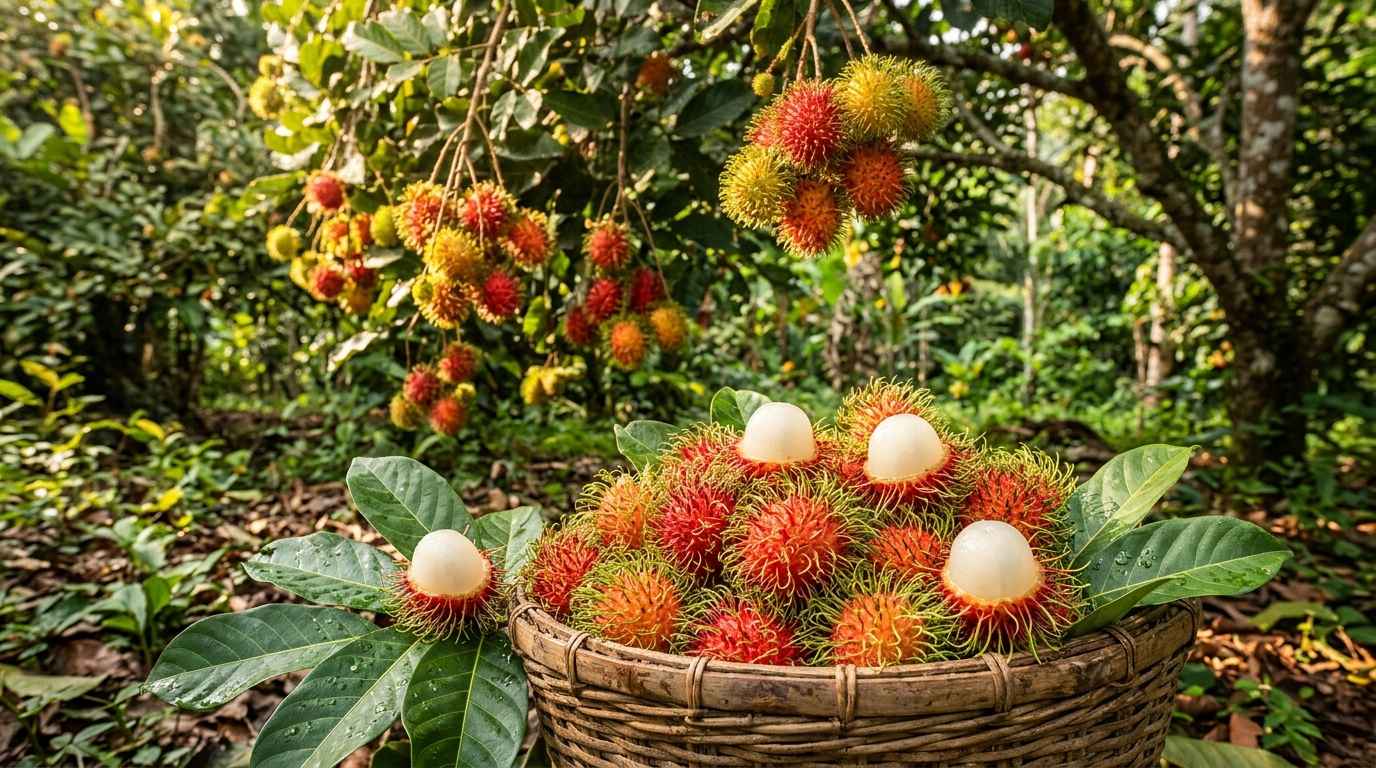
The name 'rambutan' is derived from the Malay word 'rambut,' meaning hair, a fitting description for the fruit's distinctive covering. These leathery, green to red spines, often tipped with yellow or black, create a protective shell for the treasure within. When ripe, rambutans typically display a vibrant red hue, though varieties can range from yellow to orange. The fruit grows in clusters on evergreen trees that can reach heights of up to 27 meters, adding to the allure of harvesting this tropical delight.
The Sweet Secret Inside
Peeling back the hairy exterior reveals a translucent, white, and slightly firm flesh that envelops a central seed. The taste of a ripe rambutan is a harmonious balance of sweet and subtly tart, often described as a cross between a lychee and a grape. The texture is succulent and refreshing, making it a perfect treat on a warm day. The seed, while often discarded, is edible when roasted and has a nutty flavor, though it is not commonly consumed in most parts of the world.
Nutritional Powerhouse
Beyond its delightful taste, the rambutan is a good source of essential nutrients. It is particularly rich in Vitamin C, an antioxidant that plays a crucial role in immune function and skin health. Rambutans also contain dietary fiber, which aids in digestion, and several minerals like iron, manganese, and potassium. While generally consumed for pleasure, these nutritional contributions add another layer of appeal to this tropical gem.
Culinary Versatility
While often enjoyed fresh, the rambutan's versatility extends to various culinary applications. Its sweet flesh can be incorporated into fruit salads, desserts, jams, and jellies, adding a unique tropical twist. Rambutan juice is a refreshing beverage, and it can also be used to create exotic cocktails and mocktails. In some cuisines, the fruit is even used in savory dishes, providing a subtle sweetness that complements spicy or tangy flavors.
Cultivation and Availability 
Rambutan cultivation is widespread in tropical regions, with major producers including Thailand, Malaysia, Indonesia, and Australia. While once considered a rare delicacy in non-tropical regions, improved cultivation techniques and global trade have made rambutans more accessible. They are often available in Asian markets and specialty fruit stores during their peak season, typically from June to August, and sometimes extending into the colder months depending on the region.
Selecting and Storing Your Rambutans
When selecting rambutans, look for fruits with vibrant, firm skin and soft, pliable spines. Avoid rambutans with dry, brittle spines or any signs of bruising or mold. Once purchased, rambutans are best consumed fresh. They can be stored at room temperature for a day or two, but for longer preservation, refrigerate them in a breathable bag for up to a week. Their delicate nature means they are not ideal for long term storage or freezing.
Most Popular











Anaya
comment1