



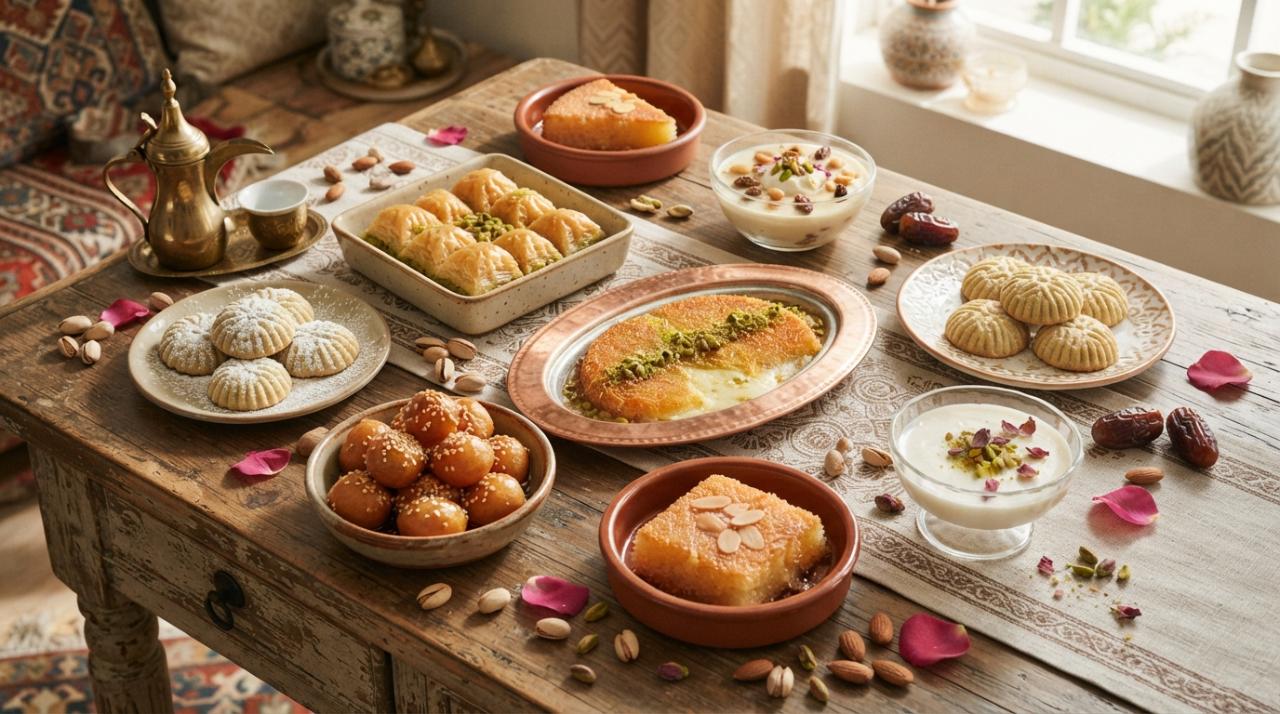
Middle Eastern cuisine is famous for its aromatic spices, rich flavors, and unforgettable sweets. From syrup-soaked pastries to creamy puddings and delicate milk desserts, traditional Arabian desserts offer a wonderful combination of textures and flavors. Often prepared for celebrations, family gatherings, and religious festivals, these treats represent the region’s long history of hospitality and culinary creativity.
Many Arabian desserts feature ingredients such as dates, pistachios, almonds, rose water, orange blossom water, honey, and fragrant spices. Whether you enjoy something crunchy and golden or soft and creamy, there is a Middle Eastern dessert to satisfy every sweet tooth.
Let’s explore seven delicious traditional desserts you can discover at home.
1. Baklava: Layers of Golden Sweetness
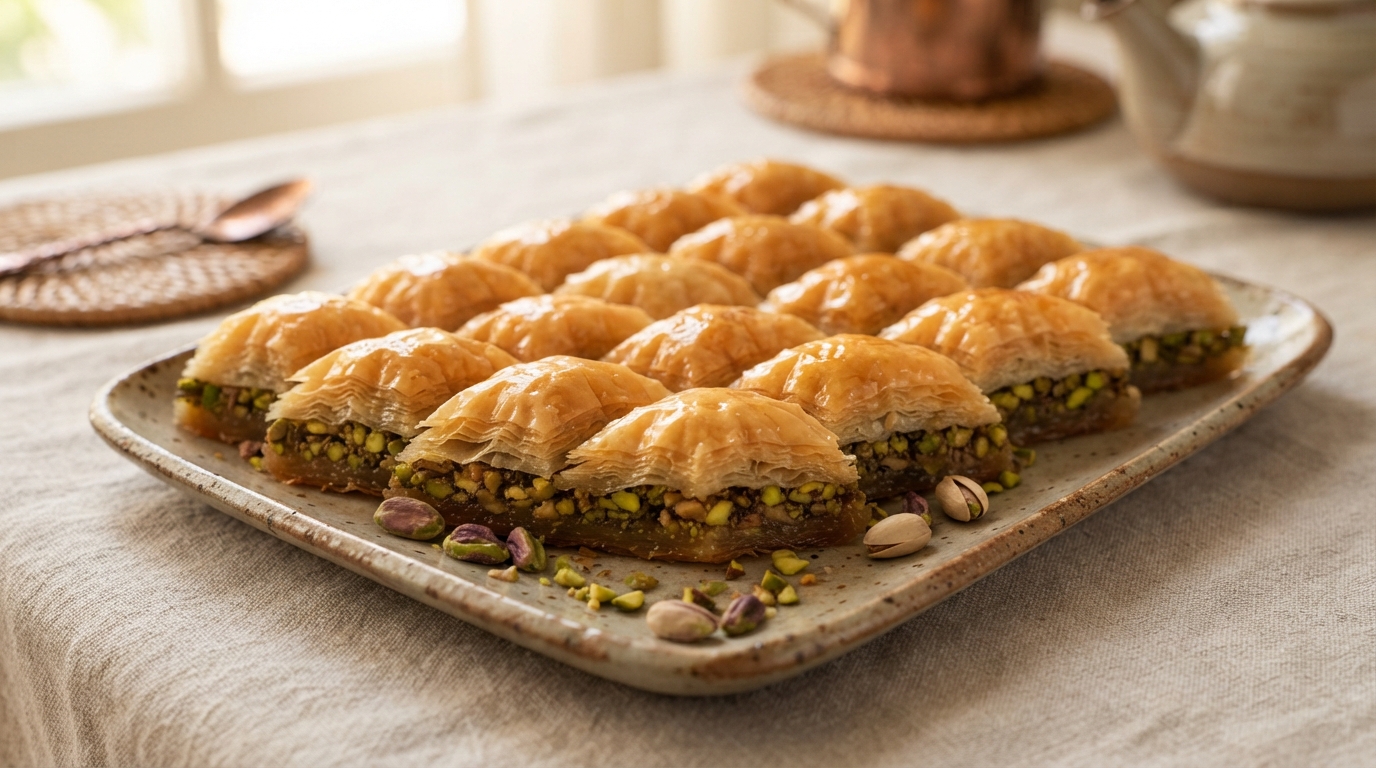
Baklava is one of the most recognizable desserts across the Middle East and the wider Mediterranean region. It consists of thin layers of pastry filled with chopped nuts and finished with sweet syrup or honey.
Pistachios, walnuts, or almonds are commonly used, depending on the regional recipe. The pastry is baked until crisp and golden, then coated with syrup that seeps between the layers.
The result is a delightful contrast between crunchy pastry, flavorful nuts, and sticky sweetness. Baklava is often served with Arabic coffee or tea, making it an excellent dessert for special occasions.
At home: Layer buttered filo pastry with finely chopped nuts, bake until golden, and drizzle with cooled sugar syrup flavored with lemon or rose water.
2. Kunafa: A Crispy Pastry with a Creamy Center
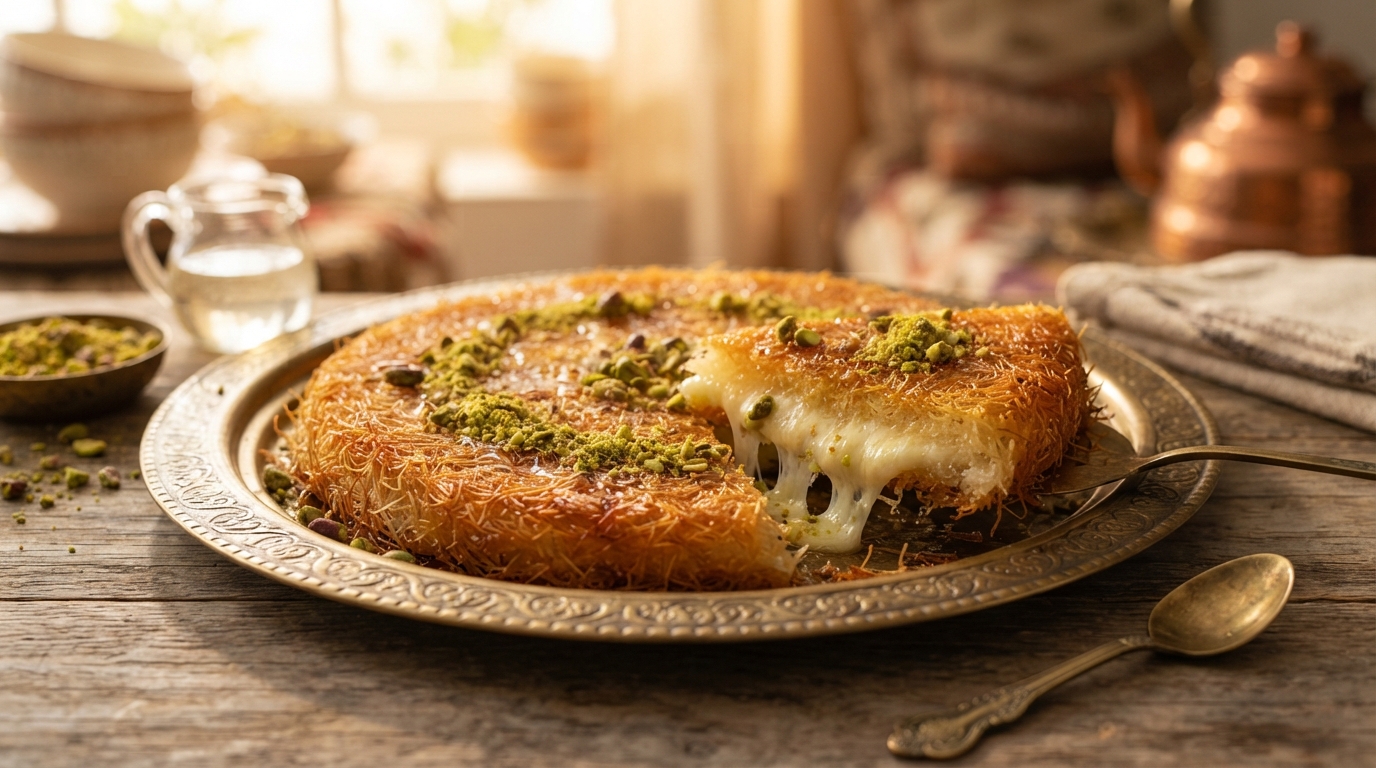
Kunafa, also spelled knafeh or kanafeh, is a beloved dessert enjoyed in many Middle Eastern countries. It is typically made with fine shredded pastry or semolina-based dough, layered around a soft cheese or cream filling.
After baking until golden, the dessert is soaked in fragrant sugar syrup and often garnished with crushed pistachios.
One of its greatest attractions is the contrast between the crisp outer layer and the soft, rich filling. Some versions use a stretchy cheese center, while others feature a creamy milk-based filling.
Kunafa is especially popular during Ramadan and festive gatherings, although it can be enjoyed throughout the year.
3. Ma'amoul: Traditional Filled Cookies
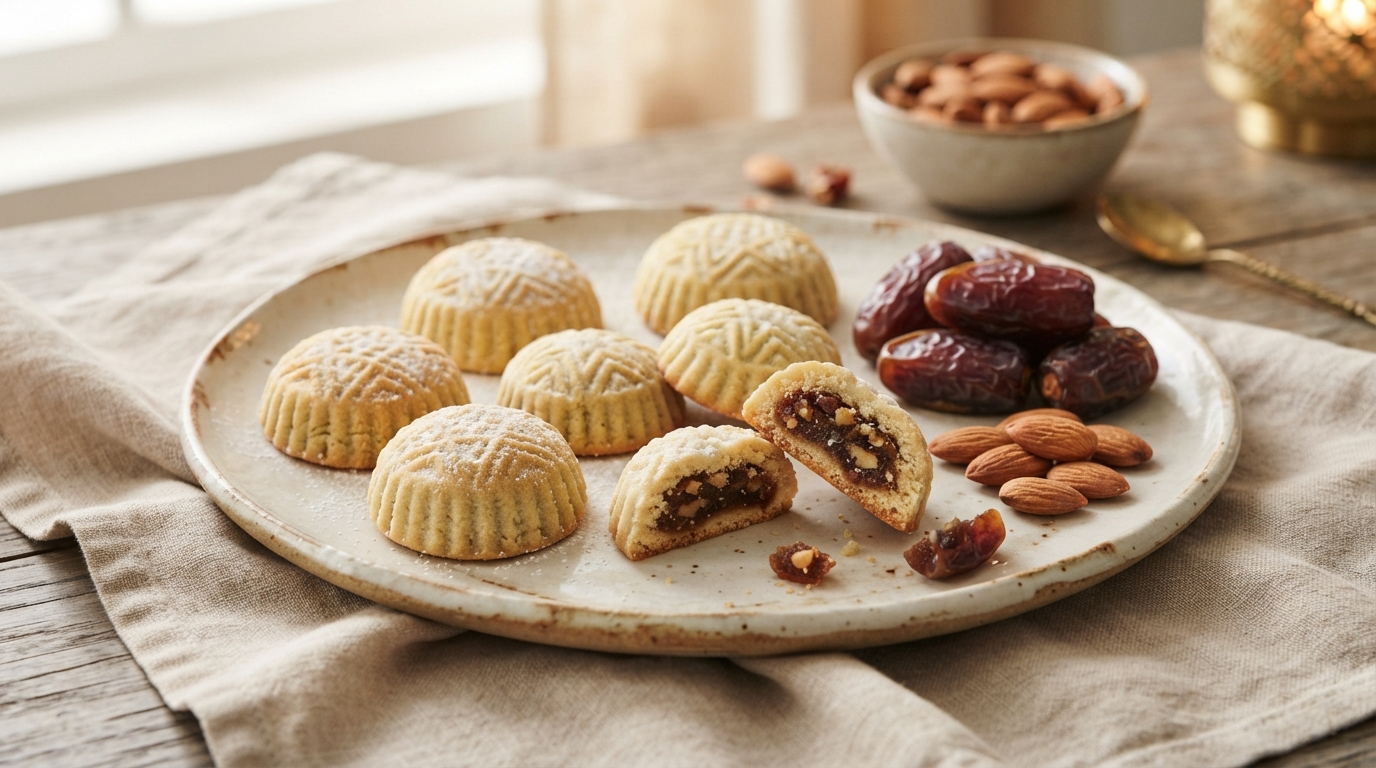
Ma'amoul are delicate Middle Eastern cookies traditionally prepared for holidays and celebrations. They are often filled with dates, walnuts, or pistachios and shaped using decorative wooden molds.
The dough is commonly made with semolina, flour, butter or ghee, and sometimes fragrant ingredients such as rose water or orange blossom water.
Date-filled ma'amoul offer a naturally sweet, caramel-like flavor, while nut-filled versions provide a pleasant crunch. Their attractive patterns make them as beautiful as they are delicious.
At home: Prepare a soft semolina dough, fill small portions with date paste or chopped nuts, shape them in a mold, and bake until lightly golden.
4. Luqaimat: Golden Arabian Sweet Dumplings
Luqaimat are small, round dumplings that are crispy outside and soft inside. Popular in Gulf countries, particularly during Ramadan, these sweet bites are usually drizzled with date syrup or sugar syrup and sometimes sprinkled with sesame seeds.
Their light texture and sweet coating make them difficult to resist. They are best enjoyed shortly after frying, when the outside remains crisp.
To prepare them, make a soft yeast-based batter, allow it to rise, and carefully drop small portions into hot oil. Fry until golden brown, drain, and finish with syrup.
For a distinctive Arabian touch, serve them warm with date syrup and a cup of Arabic coffee.
5. Umm Ali: A Comforting Bread Pudding
Umm Ali is a popular Egyptian dessert that is also enjoyed in different forms throughout the Middle East. It resembles a rich bread pudding made with pastry or bread, milk, cream, nuts, and sometimes raisins or coconut.
The ingredients are combined and baked until the top becomes golden while the inside remains soft and creamy. Some recipes use puff pastry, while others use toasted bread or flaky pastry pieces.
The combination of warm milk, crunchy nuts, and tender pastry creates a comforting dessert that is particularly enjoyable on cooler evenings or after a special meal.
For a simple homemade version, layer toasted pastry pieces with nuts and raisins, pour over sweetened milk, add cream, and bake until bubbling and golden.
6. Basbousa: Sweet Semolina Cake
Basbousa is a moist semolina cake enjoyed in Egypt and across many parts of the Middle East. It is usually sweetened with sugar syrup and often flavored with coconut or rose water.
Unlike many sponge cakes, basbousa has a slightly grainy texture from the semolina, giving it a distinctive bite. Almonds are frequently placed on top before baking, creating an attractive traditional finish.
Once baked, warm syrup is poured over the cake so it absorbs the sweetness while remaining moist.
Basbousa is relatively easy to prepare and makes an excellent choice for beginners interested in Middle Eastern baking.
7. Muhallabia: A Delicate Milk Pudding
Muhallabia is a smooth, creamy milk pudding that appears in different forms across the Middle East. It is commonly prepared with milk, sugar, and a thickening ingredient such as cornstarch or rice flour.
Rose water or orange blossom water may be added to provide a delicate floral fragrance. Once chilled, the pudding is often garnished with pistachios, almonds, or a light dusting of cinnamon.
Its gentle sweetness makes muhallabia a refreshing alternative to heavier pastries. It is also simple to prepare ahead of time, making it convenient for dinner parties and festive meals.
The Ingredients That Make Arabian Desserts Special
Several ingredients give traditional Middle Eastern sweets their distinctive character.
- Dates: Naturally sweet and widely used in fillings, sauces, and syrups.
- Pistachios and almonds: Add flavor, color, and crunch.
- Rose water and orange blossom water: Provide delicate floral aromas.
- Honey and sugar syrup: Give many pastries their glossy finish and sweetness.
- Semolina: Creates the distinctive texture of desserts such as basbousa.
- Cardamom and cinnamon: Add warmth to selected sweets and beverages.
The key is balance. Floral flavors should enhance a dessert rather than overpower it, while syrup should complement the pastry without making it unpleasantly soggy.
A Sweet Journey Through Middle Eastern Culture
Traditional Arabian and Middle Eastern desserts are more than delicious endings to a meal. They are part of a rich culture of generosity, celebration, and sharing. A platter of baklava, freshly fried luqaimat, or homemade ma'amoul can turn an ordinary gathering into a memorable occasion.
If you are new to these desserts, start with basbousa or muhallabia for a simple introduction. Once you become comfortable with the flavors, try making kunafa or baklava for a more elaborate treat.
Bring a little sweetness to your kitchen, explore these traditional recipes, and enjoy the wonderful dessert traditions of the Middle East—one delicious bite at a time.
Most Popular









Anaya
comment1