



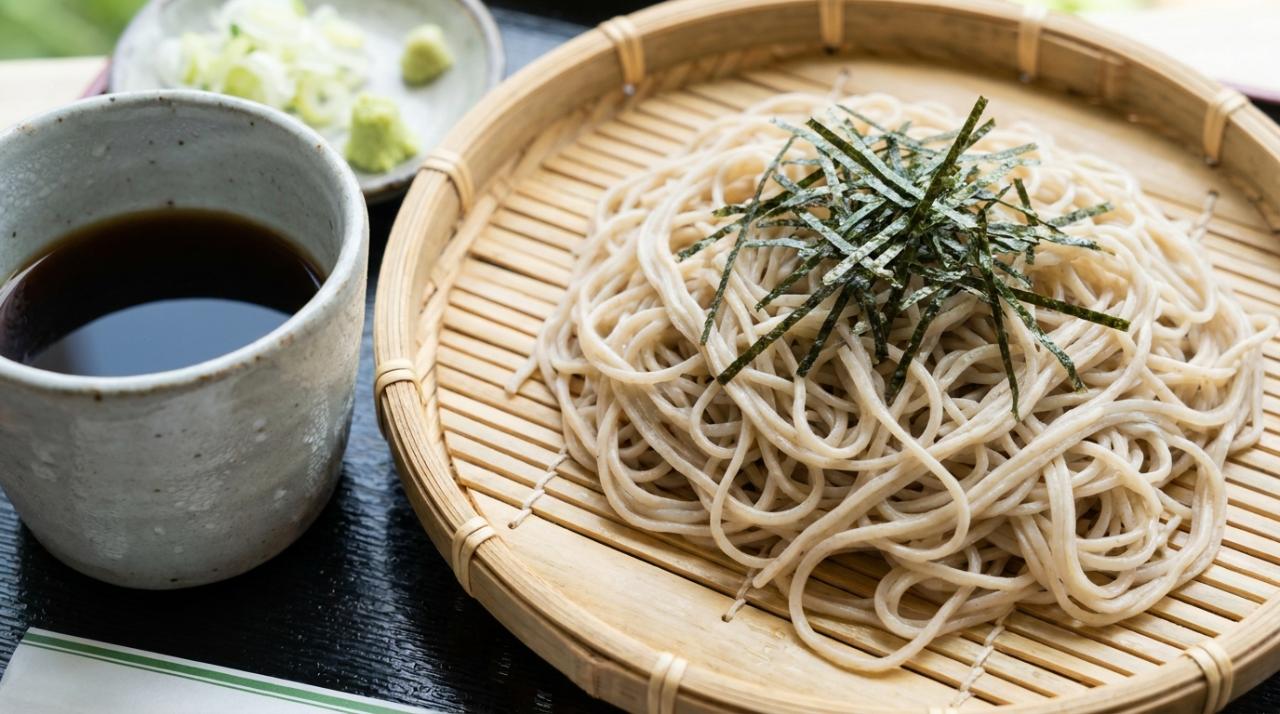
Japanese cuisine offers many dishes that celebrate simplicity, seasonal ingredients, and natural flavors. One refreshing example is zaru soba, a traditional Japanese dish made with chilled buckwheat noodles served alongside a savory dipping sauce. Popular during Japan's warmer months, this light meal allows the distinctive taste of buckwheat to shine through without heavy sauces or complicated preparation.
A traditional Japanese zaru soba recipe uses just a few essential ingredients: soba noodles, a Japanese dipping sauce called tsuyu, shredded nori seaweed, and optional garnishes such as spring onions and wasabi. After cooking, the noodles are rinsed thoroughly in cold water to remove excess starch and create their characteristic firm, smooth texture.
Unlike noodle soups, zaru soba is served without hot broth poured over the noodles. Instead, each portion is dipped into a separate bowl of sauce just before eating. This traditional serving method makes the dish refreshing, flavorful, and easy to prepare at home.
What Is Traditional Japanese Zaru Soba?
Soba refers to Japanese noodles made from buckwheat flour, sometimes combined with wheat flour to improve their texture. Zaru soba is a cold preparation traditionally served on a slatted bamboo tray called a zaru, which allows excess water to drain away.
The dish is especially appreciated in summer, although it can be enjoyed throughout the year. Its appeal comes from the contrast between cool noodles and the savory dipping sauce, which is typically made with dashi, soy sauce, and mirin.
Zaru soba is often garnished with shredded nori seaweed and served with small portions of chopped spring onions and wasabi. Diners can add these condiments to the dipping sauce according to their taste.
The simplicity of the dish reflects an important aspect of Japanese cooking: using quality ingredients and careful preparation rather than relying on excessive seasoning.
Ingredients for Traditional Japanese Zaru Soba
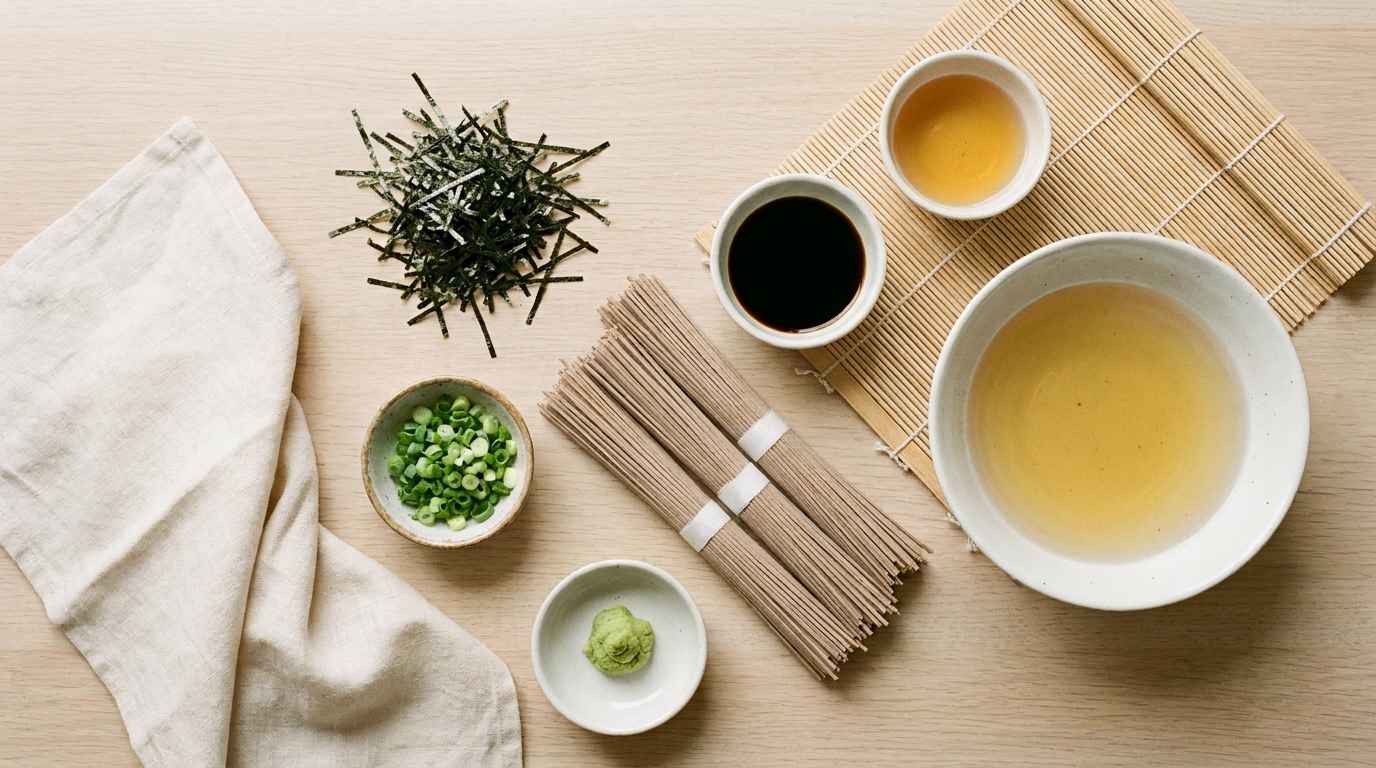
For two servings:
- 200 g dried soba noodles
- Water for boiling and rinsing
- 2 sheets nori seaweed, finely shredded
For the traditional tsuyu dipping sauce:
- 200 ml dashi stock
- 4 tablespoons Japanese soy sauce
- 4 tablespoons mirin
Optional garnishes:
- 2 spring onions, finely chopped
- A small amount of wasabi
- Grated daikon radish, if desired
For the most authentic flavor, use Japanese soba noodles and soy sauce. Buckwheat content varies between noodle brands, so check the ingredients if you prefer a stronger buckwheat flavor or need to avoid gluten.
Step-by-Step Guide to Making Zaru Soba
Step 1: Prepare the Tsuyu Dipping Sauce
Pour the dashi stock, soy sauce, and mirin into a small saucepan. Bring the mixture to a gentle simmer and cook briefly to blend the flavors.
Remove the saucepan from the heat and allow the sauce to cool. Refrigerate it until thoroughly chilled.
The resulting tsuyu should have a balanced savory flavor, with the dashi providing depth and the mirin contributing a gentle sweetness. You can adjust the sauce with a little extra dashi if you prefer a milder taste.
Step 2: Boil the Soba Noodles
Bring a large pot of water to a boil. Add the soba noodles and cook according to the package instructions, stirring gently to prevent them from sticking together.
Avoid adding oil to the cooking water. Soba noodles generally cook well in plenty of boiling water, and stirring gently helps them separate naturally.
Check the noodles toward the end of the recommended cooking time. They should be tender but retain a pleasant firmness.
Step 3: Rinse the Noodles Thoroughly
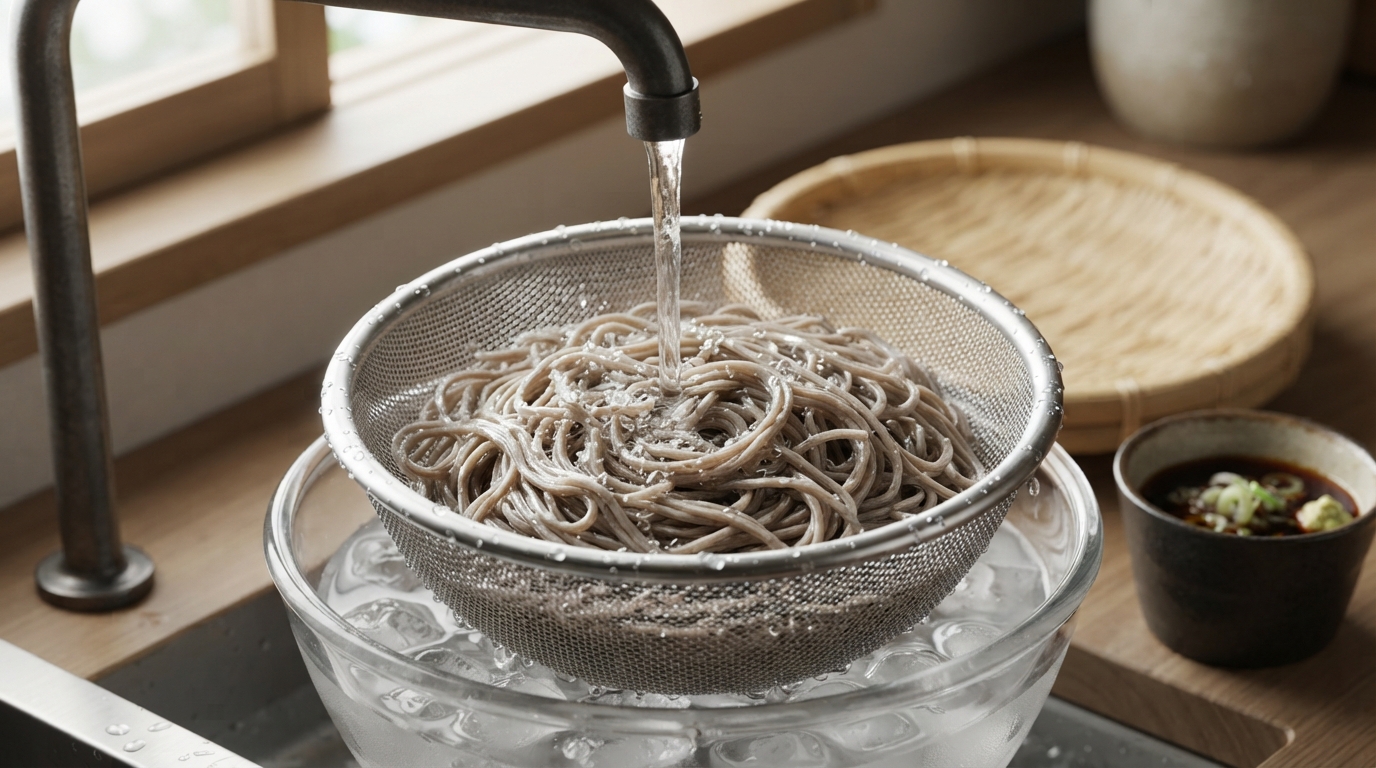
Drain the cooked noodles immediately in a colander. Rinse them under cold running water while gently rubbing the noodles between your fingers to remove excess surface starch.
This step is essential for achieving the clean taste and smooth texture associated with cold soba. Continue rinsing until the noodles are cool, then drain them thoroughly.
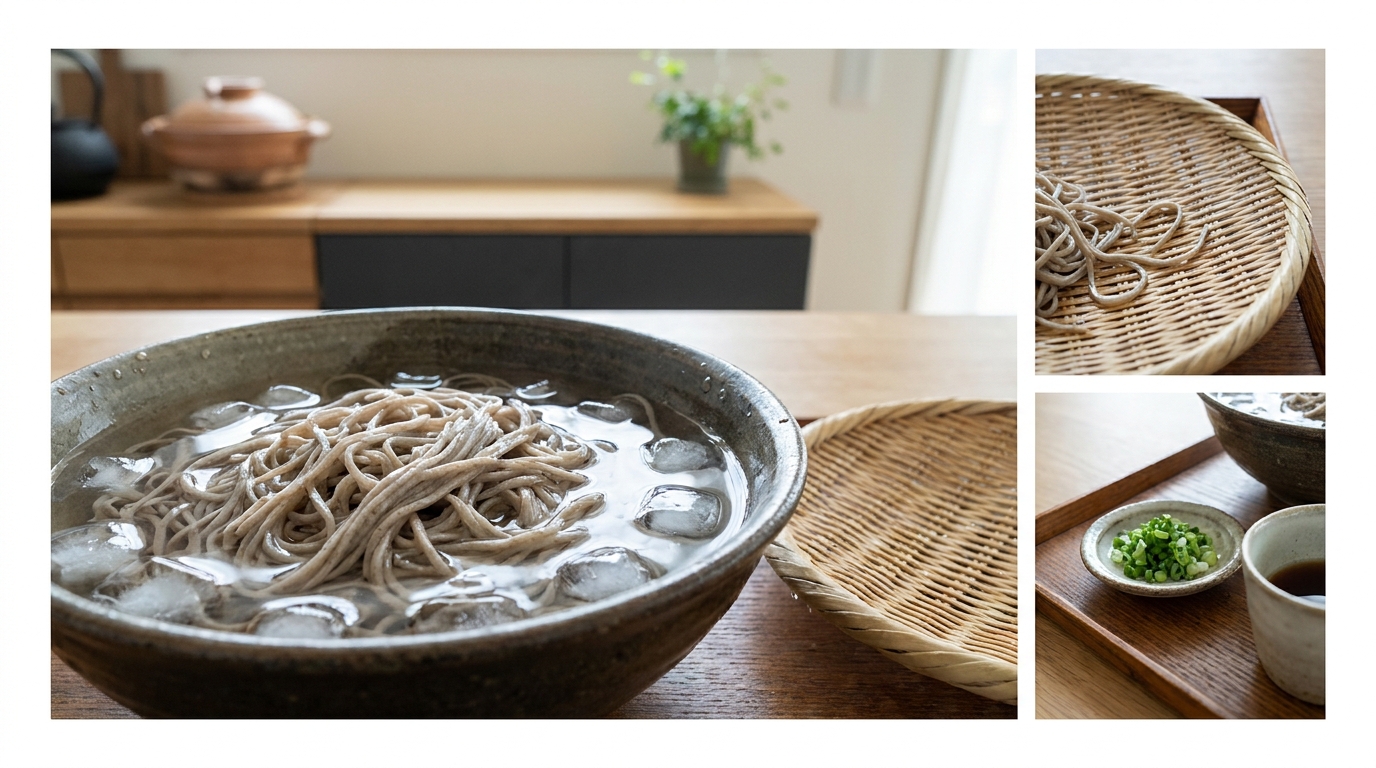
For an especially refreshing result, you can briefly chill the noodles in ice water before draining them again. Avoid leaving them submerged for too long, as this can dilute their flavor.
Step 4: Arrange the Noodles
Divide the drained noodles between two serving plates or bamboo trays. If you have a traditional zaru tray, use it to help excess water drain away.
Sprinkle shredded nori seaweed over the top. Arrange the chilled tsuyu in small individual dipping bowls, and place the chopped spring onions and wasabi alongside.
Keeping the sauce separate preserves the noodles' texture until they are ready to eat.
Step 5: Serve and Enjoy
To eat zaru soba in the traditional style, take a small portion of noodles with chopsticks and dip it into the tsuyu. Add a little spring onion or wasabi to the sauce according to your preference.
Dip only the portion you intend to eat rather than soaking the entire serving. This allows the natural buckwheat flavor to remain noticeable.
Serve immediately while the noodles and sauce are cold. Zaru soba works well as a light lunch or as part of a larger Japanese meal with tempura, grilled fish, or seasonal vegetables.
Traditional Tips for Perfect Zaru Soba
The most important step is rinsing the noodles thoroughly after cooking. This removes excess starch and helps prevent a sticky texture.
Use plenty of water when boiling the noodles, and follow the package instructions carefully because cooking times differ between brands. Drain the noodles well before serving so they do not dilute the dipping sauce.
Prepare the tsuyu in advance and chill it in the refrigerator. For a traditional flavor, homemade dashi is an excellent choice, although a suitable Japanese instant dashi can be used for convenience.
Finally, serve the noodles immediately after assembling the dish. Cold soba is at its best when the texture is firm, the sauce is flavorful, and the garnishes remain fresh.
Conclusion
A traditional Japanese zaru soba recipe demonstrates how simple ingredients can create an elegant and refreshing meal. Chilled buckwheat noodles, savory tsuyu, and fragrant nori combine to produce a dish that is light, satisfying, and deeply connected to Japanese culinary traditions.
By cooking the noodles carefully, rinsing away excess starch, and preparing a balanced dipping sauce, you can recreate this classic Japanese favorite at home. Enjoy it during warm weather or whenever you want a simple noodle dish that celebrates the natural flavors of Japanese cuisine.
Most Popular












Anaya
comment1