




Diwali is a time for glowing lamps, family gatherings, colourful decorations, and homemade sweets that bring everyone together. Among the many traditional treats prepared for the festival, Karanji is a favourite in Maharashtra and other parts of India. Its delicate, crescent-shaped pastry hides a delicious filling of coconut, sugar, nuts, and fragrant cardamom.
Known by different names in various regions, Karanji is closely related to sweets such as Gujiya. Its combination of a crisp golden shell and a sweet, aromatic centre makes it a wonderful addition to a festive dessert platter.
This traditional Karanji recipe shows you how to prepare the pastry, create a flavourful filling, and fry each piece until perfectly golden. With simple ingredients and a little patience, you can bring this much-loved festive sweet into your own kitchen.
What Makes Traditional Karanji Special?
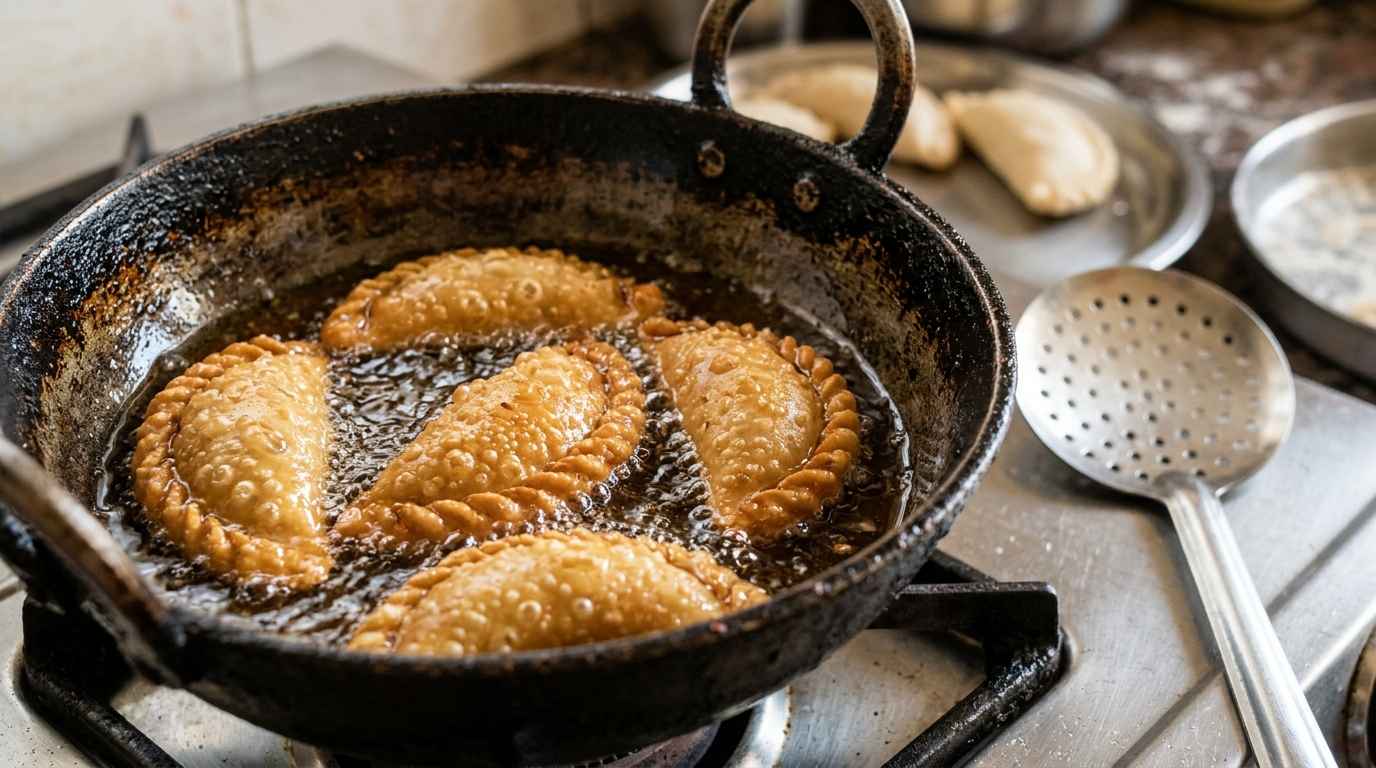
Karanji is more than a deep-fried sweet. It represents the joy of preparing food together before an important celebration. In many households, family members help roll the dough, spoon in the filling, fold the pastry, and seal its edges.
The filling varies according to regional and family traditions. Fresh or desiccated coconut, powdered sugar, cardamom, raisins, and chopped nuts are popular ingredients. Some versions use roasted semolina or poppy seeds for additional texture.
The pastry should be light and crisp, while the filling should be sweet, aromatic, and slightly nutty. Properly sealing each piece is especially important because it helps prevent the filling from escaping during frying.
Ingredients for Homemade Karanji
This recipe makes approximately 12 medium-sized Karanji.
For the pastry
- 1 cup all-purpose flour
- 2 tablespoons ghee
- A pinch of salt
- Approximately ¼ cup water, added gradually
- Oil for deep-frying
For the coconut filling
- 1 cup grated coconut, preferably desiccated for easier storage
- ½ cup powdered sugar
- 2 tablespoons semolina
- 2 tablespoons chopped almonds or cashews
- 1 tablespoon raisins
- ¼ teaspoon cardamom powder
- 1 tablespoon poppy seeds, optional
How to Make Traditional Karanji Step by Step
Step 1: Prepare the Pastry Dough
Place the flour and salt in a mixing bowl. Add the ghee and rub it into the flour until the mixture resembles fine breadcrumbs. This technique helps create a crisp pastry.
Gradually add water and knead into a firm, smooth dough. Cover it with a damp cloth and allow it to rest for approximately 20–30 minutes.
Step 2: Make the Coconut Filling
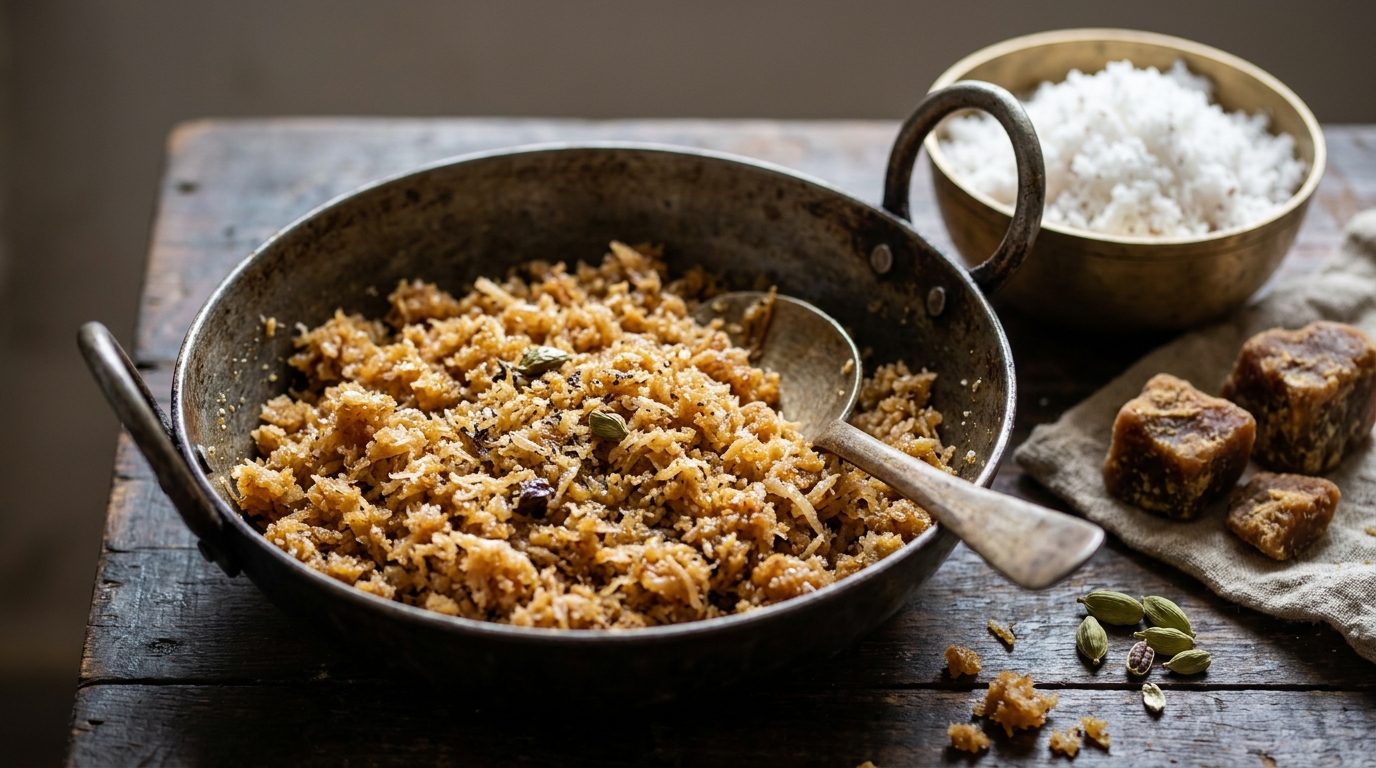
Dry-roast the semolina in a pan over low heat until it becomes lightly fragrant. Transfer it to a bowl and allow it to cool.
If using fresh coconut, cook it gently in a pan until excess moisture evaporates. Allow it to cool completely. Combine the coconut with powdered sugar, roasted semolina, chopped nuts, raisins, and cardamom powder.
Mix everything evenly. The filling should be flavourful but not wet, as excess moisture can weaken the pastry.
Step 3: Shape the Pastry
Divide the rested dough into 12 equal portions. Roll each portion into a thin circle on a lightly floured surface.
Place a small spoonful of filling on one half of the circle, leaving enough space around the edges. Avoid overfilling, as this makes sealing difficult.
Step 4: Fold and Seal
Fold the pastry over the filling to form a semicircle. Lightly moisten the edges with water and press firmly to seal them.
Trim the edges with a pastry cutter or shape them into a decorative pattern by folding and pinching the dough. Ensure there are no gaps where the filling could escape.
Step 5: Fry Until Golden and Crispy
Heat oil in a deep pan over medium-low to medium heat. Test the temperature with a small piece of dough: it should rise gradually and bubble gently rather than brown immediately.
Fry the Karanji in small batches, turning them carefully until both sides are golden and crisp. Remove them with a slotted spoon and place them on a rack or absorbent paper to drain.
Allow the sweets to cool completely before serving or storing.
Expert Tips for Perfect Karanji
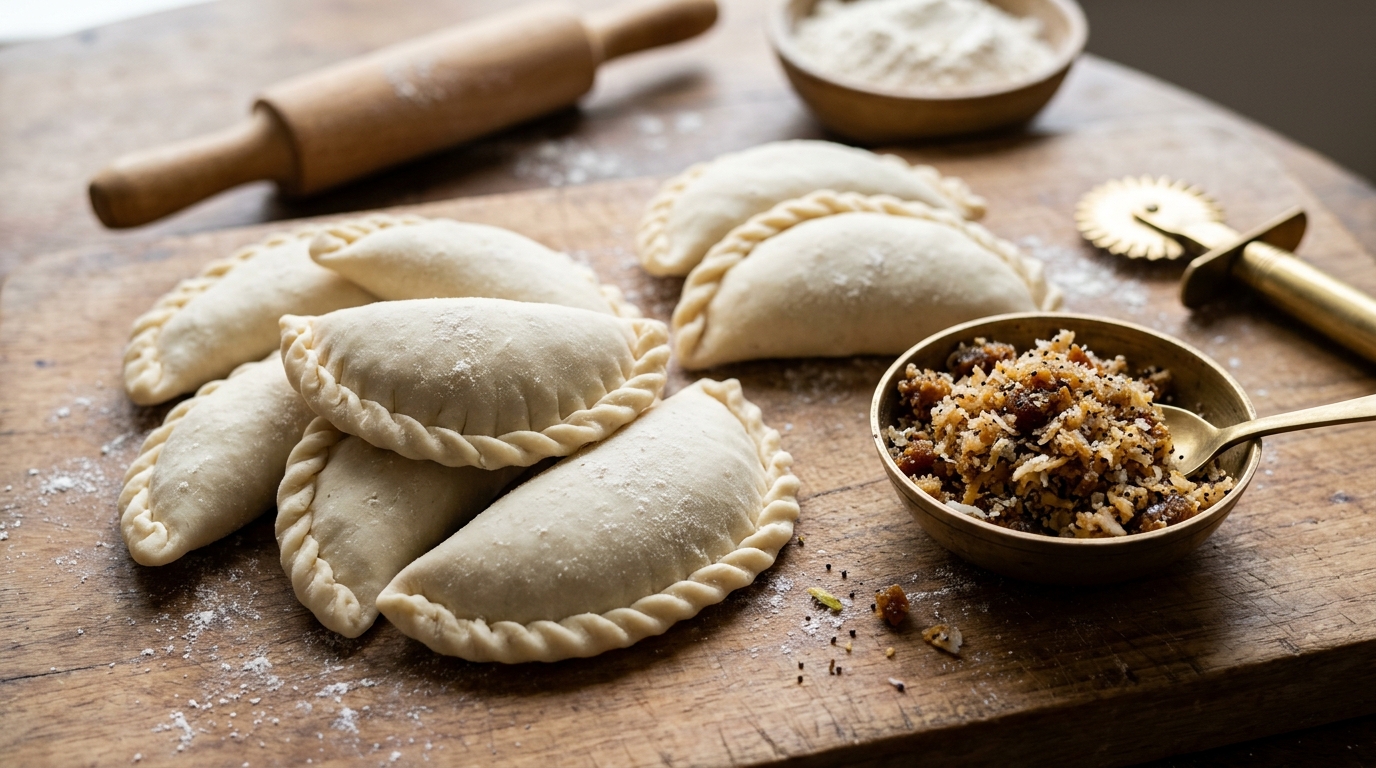
The secret to excellent Karanji is balancing the pastry texture with the filling. Adding ghee to the flour helps produce a crisp shell, while resting the dough makes it easier to roll.
Keep the filling cool and relatively dry. Seal the edges carefully and remove trapped air before frying. Maintain a consistent oil temperature to prevent the pastry from becoming greasy or dark too quickly.
For a more aromatic filling, lightly toast the nuts and poppy seeds before mixing. You can also adjust the sweetness to suit your family's preference.
How to Serve and Store Karanji
Serve homemade Karanji with tea, filter coffee, or a selection of traditional Diwali sweets. Arrange the crescent-shaped treats on a decorative plate for a festive table or package them in food-safe gift boxes for family and friends.
Once completely cooled, store them in an airtight container in a cool, dry place. Their shelf life depends on the ingredients and moisture content. Karanji made with fresh coconut may spoil sooner than versions made with thoroughly dried ingredients, so refrigerate when appropriate and follow safe food-storage practices.
A Crispy Sweet Worth Sharing
Traditional Karanji brings together simple ingredients, careful preparation, and the warmth of festive cooking. Its golden pastry and fragrant coconut filling make it a memorable treat for Diwali celebrations.
Whether you are preparing it for the first time or recreating a family favourite, this traditional Karanji recipe offers an opportunity to preserve a cherished culinary tradition. Gather your ingredients, prepare the filling, shape each crescent with care, and share the sweetness of Diwali with the people you love.
Most Popular










Anaya
comment1